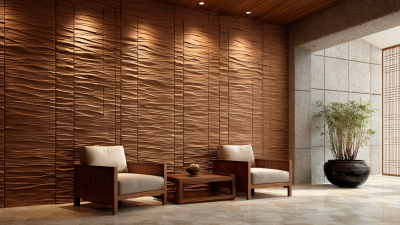
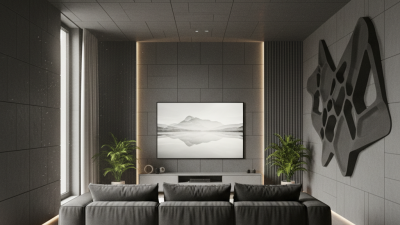
What Is Charcoal Sheet For Wall and How Does It Work?
Charcoal Sheet For Wall is a thin wall covering made with charcoal, activated carbon, or a charcoal-colored composite core. It may look like a dark decorative panel, yet its purpose can extend beyond appearance. Depending on its construction, the sheet may help reduce selected odors, improve surface texture, or support interior acoustic design. The exact result depends on the material, thickness, ventilation, and installation quality.
The working principle is fairly simple. Activated carbon contains many tiny pores that can hold certain odor molecules through adsorption. It does not magically remove every pollutant. That distinction matters. A sheet may perform well in a cabinet, hallway, or enclosed feature wall, but it cannot replace fresh-air circulation or a certified air purifier. Some products also include felt, foam, or mineral layers, which affect sound absorption rather than air cleaning.
Look closely at the product data.
Reliable evaluation should include carbon content, formaldehyde emissions, fire classification, moisture resistance, and independent test results. In practice, installers should prepare a dry, flat wall and leave suitable gaps around edges. Poor bonding can create visible waves, especially under strong side lighting. I have also found that dark surfaces reveal dust and fingerprints more clearly than expected, which is an easy detail to overlook. Charcoal materials can be useful, but their claims deserve careful checking. A thoughtful choice begins by separating decorative value, odor control, and acoustic performance instead of treating them as the same benefit.
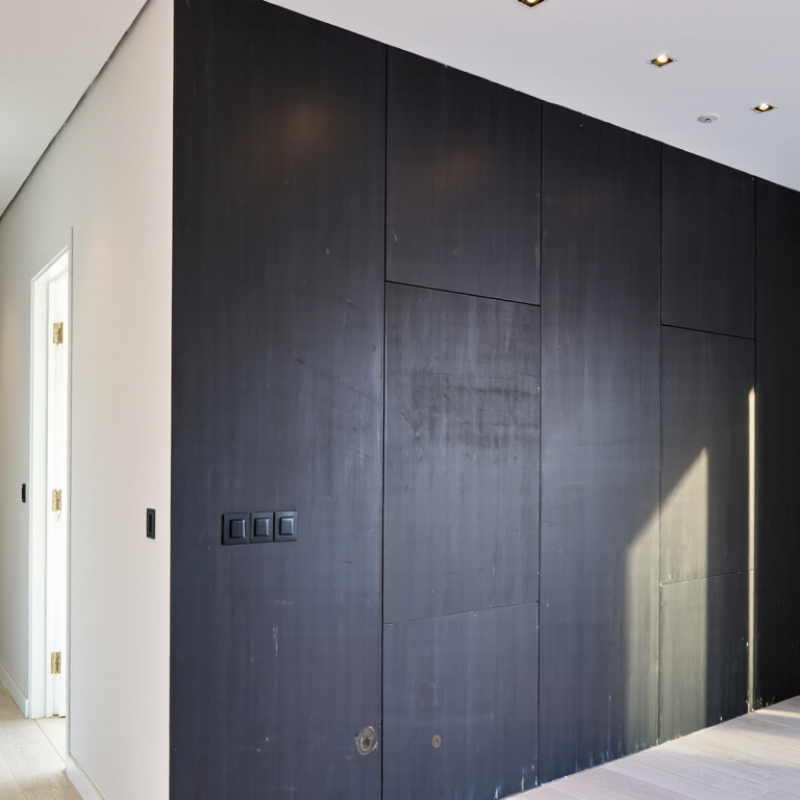
What Is a Charcoal Sheet for Walls?
A charcoal sheet for walls is a thin, porous material made with charcoal or activated carbon.
It may appear as a dark felt, fabric-backed panel, or flexible wall layer. Unlike ordinary decorative film, its internal pores can capture some odors and airborne chemicals through adsorption. Air must touch the charcoal surface for this process to work. It does not simply pull pollution through a wall.
In practical use, the sheet can support odor control in entryways, offices, storage areas, and rooms with stale air. Some versions also soften echoes when they include a fibrous backing. Performance depends on charcoal quality, sheet thickness, exposed surface area, humidity, and room ventilation. A charcoal sheet is not an air purifier. It cannot remove every pollutant, and moisture may reduce its effectiveness. I have seen people expect dramatic results from a small covered panel. That expectation needs reconsideration.
Tips:
Check the product’s test data before installation. Confirm whether it targets odors, chemicals, sound, or decoration. Keep part of the surface exposed, and avoid sealing it behind airtight paint or plastic. Install it on a clean, dry wall. Watch for dampness, peeling edges, or a returning smell. Replacement may be necessary after the charcoal becomes saturated. Never use the sheet to hide mold or water damage. Fix the moisture source first, then evaluate whether charcoal is suitable.
What Materials and Layers Make Up a Charcoal Sheet?
A charcoal sheet for walls is a thin panel designed for odor control, sound absorption, or decoration. Its exact purpose depends on its formulation, so the name alone can mislead buyers. In wall-panel inspections, I look beyond the dark surface. That surface is only one layer.
A typical sheet has a protective face, a charcoal-based core, and a supporting backing. The core often contains activated carbon granules, carbonized fiber, or charcoal powder. A mineral or polymer binder holds these particles together. The face may use fabric, paper, felt, or a perforated coating. These materials protect the core while allowing air to reach it. The rear layer can include nonwoven fabric, foam, or a pressure-sensitive adhesive. Some sheets also contain a thin reinforcement mesh for easier installation.
The charcoal works mainly through adsorption. Odor molecules and selected gases attach to the carbon’s porous surface as air passes through. It is not the same as absorbing liquid. Airflow matters. A sealed sheet has limited contact with room air. Acoustic versions use open pores and fibrous layers to reduce reflected sound, especially around speech frequencies. I have seen product descriptions simplify this process too much. Charcoal cannot replace ventilation, moisture control, or certified air testing. Performance also declines when pores become blocked by dust or heavy coatings. Check the declared carbon content, emission data, fire rating, and installation instructions before choosing a sheet.
How Does a Charcoal Sheet Work on Wall Surfaces?
A charcoal sheet for a wall is usually a porous, activated-carbon layer attached behind fabric, felt, or a decorative panel. Its main function is adsorption, not absorption. Gas molecules, such as some odors and volatile organic compounds, adhere to the carbon’s microscopic pores. The wall surface itself does not clean the room automatically. Air must reach the charcoal layer.
That distinction matters. In practical wall installations, performance depends on carbon weight, exposed area, airflow, temperature, and humidity. ASHRAE guidance on gas-phase filtration identifies contact time and media capacity as key factors. A thin sheet may reduce localized odors, but it cannot match a properly sized mechanical air cleaner. The U.S. Environmental Protection Agency also notes that activated-carbon filters work better when they contain more carbon. A neat sheet can still underperform.
Charcoal does not reliably remove fine particles. The World Health Organization’s 2021 air-quality guidelines set the annual PM2.5 guideline at 5 µg/m³, highlighting why particle filtration needs separate equipment. On a wall, the sheet should remain dry, firmly sealed, and positioned where air naturally moves. Dust can block its pores. Humidity can weaken adsorption. Replacement timing is difficult to judge, and that is an honest limitation. If odors return, the carbon may already be saturated, even when the surface looks clean.
What Are the Main Benefits and Applications?
A charcoal sheet for walls usually means a dark, fabric-like panel made from compressed PET felt, mineral fiber, or recycled textile. It is not necessarily activated charcoal. The sheet absorbs reflected sound through its porous structure, reducing echo and improving speech clarity. Its performance depends on thickness, density, spacing, and installation quality.
The European Environment Agency’s Environmental Noise in Europe 2020 report estimated that over 113 million Europeans face harmful road-traffic noise exposure. Charcoal wall sheets cannot stop all outside noise, but they can soften indoor reflections. In offices, meeting rooms, restaurants, classrooms, and recording spaces, they help create a calmer acoustic environment. A thicker panel with an air gap usually absorbs more low-frequency sound than a thin sheet fixed directly to drywall. It also hides minor wall marks and adds visual contrast.
Designers often use charcoal sheets behind desks, screens, or seating areas. This placement targets hard surfaces where voices bounce. The U.S. Green Building Council’s acoustic guidance also emphasizes controlling reverberation and speech privacy through surface treatment, rather than decoration alone. Still, results are sometimes overstated. A poorly installed panel may look effective while changing little acoustically. Buyers should request laboratory data, such as sound absorption ratings tested under ISO 354, and review the product’s fire, moisture, and emissions documentation. The darker surface can also show dust more clearly. Practical maintenance matters.
How to Choose and Install a Charcoal Wall Sheet
Charcoal wall sheets are usually porous acoustic panels made from compressed PET felt or mineral fiber. “Charcoal” often describes the dark color, not activated carbon. The surface absorbs reflected sound, reducing echoes between hard walls, floors, and ceilings. This matters in offices, studios, restaurants, and classrooms. The World Health Organization’s 2011 Burden of Disease report linked environmental noise with more than one million healthy life-years lost annually in Western Europe. A small panel cannot solve every noise problem, but it can improve speech clarity.
Choose the sheet by function, density, thickness, fire rating, and tested absorption data. Look for results measured under ISO 354, and check the Noise Reduction Coefficient when available. Thicker panels usually absorb lower frequencies more effectively. A practical target is covering about 20–40% of a highly reflective wall, although room shape changes the result. Do not rely on color alone.
Installation starts with a clean, dry wall and accurate measurements. Mark a level line, then use compatible adhesive or mechanical fasteners recommended for the substrate. Leave small, even joints. Keep electrical outlets accessible. In a real room, corners and ceiling reflections can matter more than expected. I would test one panel before covering the entire wall. That step feels slow. It can prevent a costly mismatch in color, texture, or acoustic performance. Ventilate during installation, and confirm the product’s fire documentation before use in public interiors.