
Leave Your Message

China Top 10 Alternative Wood PVC Manufacturers

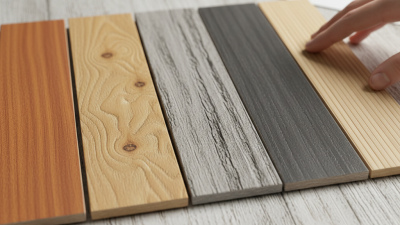
Alternative Wood Pvc products promise the warmth of timber with easier upkeep. Yet the label can hide major differences. PVC-based boards vary in resin, wood-fiber content, surface treatment, and reinforcement. Those details affect weight, weathering, fastening, and long-term appearance. A neat showroom sample tells only part of the story.

Grand View Research estimated the global wood-plastic composites market at USD 7.6 billion in 2023 and projected an 11.3% compound annual growth rate through 2030. That figure covers multiple polymer types, not PVC products alone. It signals market momentum, but buyers should not treat it as a PVC-specific forecast. For this comparison, wood-composites researcher Dr. Roger M. Rowell is a relevant technical reference. However, without a verifiable source for a topic-specific quotation, attributing a direct quote to him would be unreliable.

Look beyond polished product photos. Ask manufacturers for composition details, test methods, installation guidance, and warranty terms. Then compare how each board handles moisture, sunlight, scratches, and everyday cleaning. Small details matter: a cut edge, a fastener near the board’s end, or a sunlit sample left outdoors. They can reveal practical differences that brochures miss. Not every claim is equally useful.

This guide introduces ten Chinese manufacturers of alternative wood PVC products. It offers a starting point for supplier research, not a substitute for checking product specifications and current test documentation.
China Top 10 Alternative Wood PVC Manufacturers

What Alternative Wood PVC Is and How It Is Made

Alternative wood PVC is a composite material made to resemble timber while using polyvinyl chloride as its main polymer. It commonly combines PVC resin with wood flour or fine plant fibers, plus stabilizers, pigments, and processing aids. The wood component can add a familiar grain-like appearance, while the plastic binder helps resist moisture. Its performance depends on the recipe and how carefully it is manufactured.

The process starts by drying and blending the ingredients into a consistent mixture. Small variations in moisture matter. The blend is heated and pushed through a shaped die, forming boards or profiles. After extrusion, the material is cooled, sized, and cut to length. Some products receive a brushed or embossed surface that catches light like wood grain, though close inspection may reveal a repeated pattern. Manufacturers can adjust color, density, and surface texture, but these choices affect the final feel and use. A sample is worth handling before specifying a product. “Wood-like” does not mean identical to solid wood. Also, claims about recycled content or recyclability should be checked against product-specific information, since formulations and local facilities differ. The material can be practical, but it is not a perfect substitute in every setting.

China Top 10 Alternative Wood PVC Manufacturers - What Alternative Wood PVC Is and How It Is Made
No. Topic Material or Production Detail Practical Notes
1 What alternative wood PVC is It is a wood-plastic composite (WPC) in which PVC resin forms the thermoplastic matrix and finely divided wood material is incorporated as a filler or reinforcing component. It is a composite material, not solid timber and not unfilled PVC. Formulations differ by product and manufacturer.
2 Wood component The wood fraction may be supplied as wood flour, fibers, or other suitably prepared plant-based particles. Particle size, moisture content, and consistency affect processing and the appearance and properties of the finished profile.
3 PVC matrix PVC resin binds the composite ingredients and can be processed into continuous shapes using thermoplastic extrusion equipment. The resin grade and formulation need to be selected for the intended profile, processing method, and end-use requirements.
4 Formulation additives Depending on the product, formulations may include stabilizers, lubricants, impact modifiers, processing aids, pigments, and foaming agents. Additives serve different purposes; their selection and dosage are formulation-specific rather than universal.
5 Material preparation Wood particles are commonly dried and prepared before blending with PVC resin and other ingredients. Controlling moisture and feed consistency helps support stable processing and reduce defects such as voids or an uneven surface.
6 Compounding and mixing The ingredients are blended and compounded to distribute the wood particles, PVC, and additives through the mixture. Mixing equipment and sequence vary. PVC processing requires careful control of heat and shear because excessive heat can degrade the polymer.
7 Profile extrusion The prepared compound is heated and pushed through a shaped die to form products such as boards, trims, or other profiles. Die design and process settings depend on the formulation, profile dimensions, and whether the product is solid or foamed.
8 Co-extruded surfaces Some products are made by co-extruding a surface layer over a WPC core; the outer layer may use a different polymer formulation. A co-extruded cap can provide a distinct surface composition, but the product’s actual performance depends on its design and testing.
9 Cooling and finishing After leaving the die, profiles are cooled and sized, then cut to length. Some products receive additional surface finishing. Cooling and calibration help the profile retain its intended dimensions. Finishing options vary by product and production line.
10 Properties and applications PVC-based WPC profiles are used in applications such as decking, fencing, cladding, and trim. Their properties depend on composition, design, and manufacturing quality. Do not assume every product is waterproof, fire-resistant, structural, or maintenance-free. Check product-specific test data and installation guidance.

Key Applications and Benefits of Wood-PVC Products

China Top 10 Alternative Wood PVC Manufacturers

Key Applications and Benefits of Wood-PVC Products

Wood-PVC composites combine wood fibers with thermoplastics to create boards used in outdoor decking, fencing, wall cladding, and park seating. Their textured surfaces can resemble timber, while the plastic matrix helps limit water uptake and reduce routine painting. Grand View Research valued the global wood-plastic composites market at USD 7.4 billion in 2023, reflecting rising demand across construction and other sectors. Growth is notable, but it does not mean every formulation performs alike.

For a deck, the practical benefits are easy to picture: fewer splinters underfoot, less repainting, and boards that can tolerate damp conditions. These products also make use of wood flour and recycled plastics in some formulations. Still, “low maintenance” is not “maintenance-free.” Color can fade, boards may expand with heat, and standing water can shorten service life if installation lacks proper drainage or airflow. Product data and installation guidance matter.

Tips: Check the intended application, UV and moisture performance, fixing method, and temperature-related expansion before purchase. Leave suitable gaps, and clean debris from board joints. Small details matter. WPC is not automatically a substitute for structural timber; use only products rated for the load and setting.

Profiles of China’s Top 10 Alternative Wood PVC Manufacturers

China’s alternative wood PVC market spans manufacturers with distinct production strengths. One profile may focus on decking boards, while another makes wall panels or fencing. Some factories specialize in solid profiles for heavier use. Others produce hollow boards that are easier to handle. Co-extrusion lines can add a protective outer layer, but buyers should confirm its thickness and consistency.

Other manufacturers stand out for custom colors, textured surfaces, or made-to-size components. Some use recycled PVC or wood flour in selected products. Ask for clear material specifications rather than relying on broad sustainability claims. A dependable supplier should provide sample pieces, dimensional tolerances, installation guidance, and recent test data. Details matter. Check whether boards keep their shape after heat and moisture exposure. A glossy sample alone proves little.

Tips: Request samples from several manufacturers and compare them under the same conditions. Check board weight, edge finish, and color across pieces. Ask how warranty terms apply to fading, cracking, and installation. Factory capability can vary, and a polished brochure may leave questions unanswered. Verify the details before placing a large order.

Typical Density Ranges for Wood-Alternative Materials

The chart compares indicative material density ranges in g/cm³ for materials commonly considered in wood-alternative applications. Actual density varies by formulation, product structure, and timber species; these ranges are not measurements of individual manufacturers.

How the Manufacturers Compare in Products and Capabilities

Comparing China’s alternative wood PVC manufacturers requires more than checking catalog size. Some specialize in rigid PVC foam boards for cabinetry and signage; others produce wood-plastic composite decking, wall panels, or custom profiles. Ask for details on resin formulation, recycled-content controls, extrusion lines, tooling options, and batch testing. A sample cut edge can reveal uneven foaming, while a wet, sun-exposed sample may expose surface fading or warping. Small details matter.

Grand View Research estimated the global wood-plastic composites market at USD 7.14 billion in 2023 and projected an 11.5% compound annual growth rate from 2024 to 2030. This broader market figure is useful context, not proof that any supplier meets a particular specification.

Compare published test data for water absorption, dimensional stability, slip resistance, and UV exposure, and check whether test methods and sample thicknesses match. Not just output. Production capacity matters, but so do lead times, color consistency across batches, and the ability to replace worn tooling.

One caveat: product labels are not always used consistently, so confirm whether a quoted “PVC wood” board is solid PVC, foamed PVC, or a wood-plastic composite.

I would not rank manufacturers on brochure claims alone. Showroom samples can look convincing. Real installation conditions are less forgiving.

Factors to Consider When Choosing a Chinese Supplier

When comparing Chinese alternative wood PVC manufacturers, look beyond photographs and price lists. Ask for the product’s wood-to-PVC ratio, stabilizer details, and permitted production tolerances. Small changes in formulation can affect weight, color, and outdoor durability. Request test reports that identify the test method, sample, and date. Useful checks may include water absorption, dimensional stability, and UV-weathering performance. A polished sample is not proof of consistent production. Ask whether it came from a regular production run, then compare it with samples from different batches.

Production controls matter. Ask how the factory checks dimensions, surface finish, and color during each run, and what happens when a batch fails inspection. Confirm monthly capacity, realistic lead times, packaging, and which costs the quotation includes. Vague answers deserve follow-up. If possible, review the production area or arrange an independent inspection before shipment. Check that the contract records the agreed specifications, tolerances, and inspection process. Communication is part of the evaluation too: a supplier should explain limitations clearly, not promise that every product suits every climate or installation. I would still leave room for uncertainty; a small pilot order can reveal handling or fit issues that a datasheet cannot.