
Leave Your Message

How to Choose Modern Wood Veneer Paneling in 2026?

Choosing Modern Wood Veneer Paneling in 2026 requires more than matching a color to a mood board. It demands evidence, material knowledge, and careful supplier questions. The United Nations Environment Programme’s 2024 Global Status Report states that buildings consumed 32% of global energy in 2023 and produced 34% of energy-related carbon emissions. Interior materials cannot solve this problem alone. However, their durability, sourcing, and replacement cycles still matter.

Forest responsibility should remain visible behind the finished surface. The FAO’s Global Forest Resources Assessment 2020 recorded approximately 4.06 billion hectares of forest worldwide, while FSC’s 2024 facts and figures reported certification across more than 160 million hectares. These figures do not prove that every veneer panel is sustainable. They only show why chain-of-custody documents deserve attention. Look for FSC or PEFC certification, species information, core composition, and credible environmental product declarations.

Performance also depends on details that photographs hide. Check veneer thickness, panel stability, formaldehyde compliance, fire classification, moisture resistance, and installation tolerances. In the United States, EPA TSCA Title VI requirements are especially relevant for composite wood products. European projects may require different documentation. Standards vary.

Taste can mislead. A dramatic walnut face may conceal a weak substrate or poor edge treatment. This guide compares grain selection, panel construction, maintenance, cost, and supplier transparency for residential and commercial interiors. It also questions common assumptions, because “natural” does not automatically mean low-impact. Small mistakes matter. A beautiful panel that warps beside a window becomes an expensive lesson.
How to Choose Modern Wood Veneer Paneling in 2026?

Define Modern Wood Veneer Paneling and Its Main Applications

How to Choose Modern Wood Veneer Paneling in 2026?

Modern wood veneer paneling is an engineered interior surface with a thin layer of real wood bonded to a stable core. It offers natural grain with more predictable sizing than solid timber. The Forest Products Association reported that global panel production remains above 350 million cubic metres annually, showing the importance of engineered wood in construction. Veneer panels use less valuable timber than solid boards, but manufacturing quality still matters.

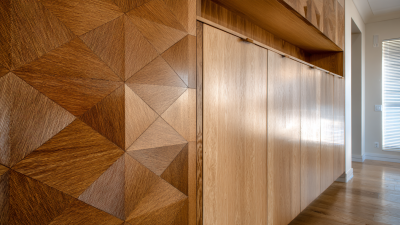
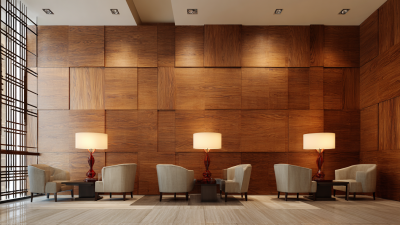
Its main applications include feature walls, ceilings, reception desks, cabinet fronts, doors, and acoustic treatments. In a hotel lobby, vertical walnut veneer can create warmth without making the space feel heavy. In a home office, pale oak panels can soften sound and reduce visual glare. Furniture makers also use veneer for large, consistent surfaces. The FAO’s forestry data places global industrial roundwood production near two billion cubic metres yearly, so responsible sourcing deserves attention.

Choose panels by core stability, veneer thickness, fire rating, moisture resistance, and installation method. Ask for chain-of-custody documents and technical test results. Check samples under daylight; showroom lighting can hide uneven color. I would not call every veneer panel sustainable. Adhesives, transport, replacement cycles, and waste change the calculation. That detail is easy to overlook. Also, real wood varies. A perfect, identical grain may indicate heavy selection rather than superior performance.
Compare Veneer Species, Grain Patterns, and Surface Finishes

How to Choose Modern Wood Veneer Paneling in 2026?

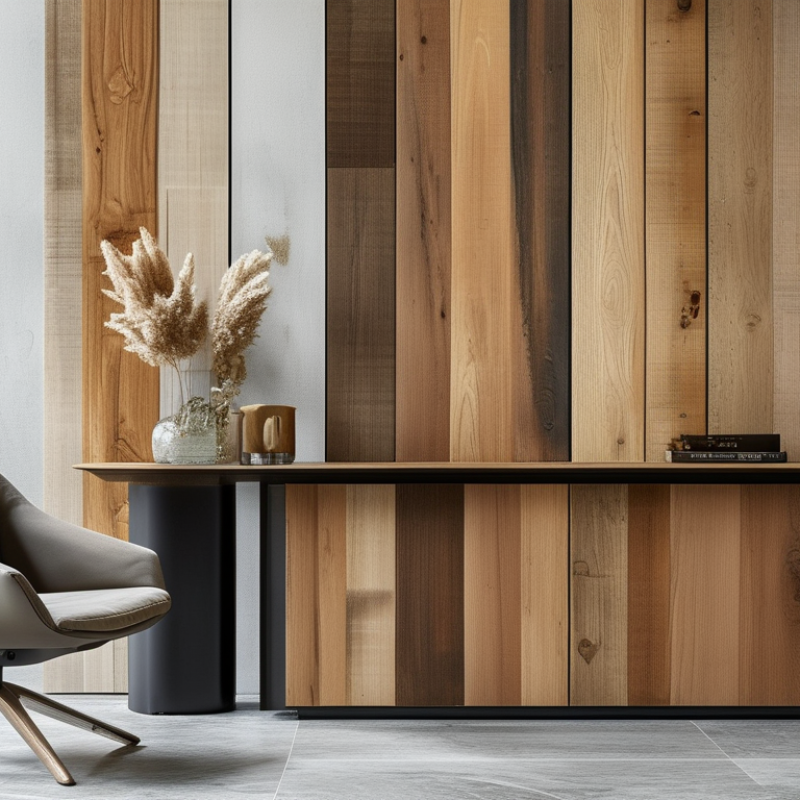
Species shape the room before color does. White oak gives open pores and calm cathedral grain. Walnut creates darker lines and stronger visual weight. Maple looks quieter, but its pale surface can reveal uneven staining. The USDA Forest Products Laboratory’s Wood Handbook notes that interior wood commonly stabilizes near 8% moisture content in heated buildings. Ask for acclimatized panels. A beautiful veneer can still move after installation. I learned that the hard way.

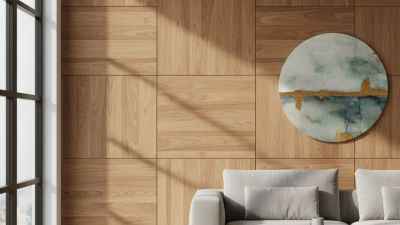
Grain direction changes perceived scale. Rift-cut veneer produces straighter lines for minimalist walls. Rotary-cut veneer shows wider, more expressive movement. Bookmatched sheets create symmetry, although perfect repetition may feel slightly artificial.

For finishes, matte oils preserve a tactile, dry appearance. Water-based coatings usually keep light species clearer than many solvent-based finishes. Check the technical sheet, not only the showroom sample. Gloss levels can look different beside windows.

Tips: Compare samples at morning and evening. Touch the surface. Inspect three adjacent sheets for color shifts. For kitchens or entryways, choose a repairable clear finish with documented abrasion performance. The FAO Global Forest Resources Assessment 2020 reports that forests cover about 31% of global land, while 420 million hectares disappeared between 1990 and 2020. Request species documentation and responsible sourcing records. Sustainability claims need evidence. One detail is easy to miss: darker finishes often magnify scratches.

Evaluate Panel Construction, Dimensions, and Installation Methods

Modern wood veneer paneling starts with its internal construction, not its surface color. Inspect the core, veneer thickness, backing, and edge treatment before comparing samples. A stable plywood or moisture-resistant fiberboard core usually performs better in changing indoor conditions. Thin decorative veneer can look refined, but damaged edges may expose the core quickly. Tap several areas. Hollow sounds can indicate voids or weak bonding.

Dimensions affect both appearance and labor. Common panels range from narrow slats to sheets about 1200 millimeters wide and 2400 millimeters high. Larger panels create fewer visual breaks, yet they demand accurate walls and careful handling. Measure the room twice, including doors, outlets, and ventilation grilles. Leave movement gaps around floors, ceilings, and corners. Wood still responds to humidity. Ignoring that detail is an expensive mistake.

Installation should match the wall and panel weight. Cleats or mechanical clips allow easier removal and help create a level, ventilated cavity. Direct adhesive installation can appear seamless, but the wall must be clean, dry, and reasonably flat. Battens can correct uneven masonry, though they reduce usable room depth. I once underestimated an uneven corner and lost a full afternoon trimming panels. A laser level, spacers, and a fine-tooth saw prevent similar errors. Ask for tested fixing guidance, fire-performance data, and recommended acclimation time before cutting. Some specifications seem overly cautious, but local humidity can prove them right.

Assess Sustainability, Durability, Maintenance, and Indoor Air Quality

How to Choose Modern Wood Veneer Paneling in 2026?

Sustainability starts with the panel’s entire life cycle. The FAO’s Global Forest Resources Assessment 2020 reports that forests cover 31% of global land. It also records about 420 million hectares lost since 1990. Choose documented legal harvesting, recycled cores, and third-party chain-of-custody certification. Veneer uses thin wood layers, but waste still depends on factory practices. Ask for production data, not attractive claims.

Durability depends on moisture, impact, installation, and surface finish. The USDA Forest Products Laboratory’s Wood Handbook identifies moisture as a major cause of wood movement. In a busy hallway, select a stable substrate and a repairable finish. Check edge sealing near sinks and exterior doors. EPA reports indoor pollutant levels can be two to five times higher than outdoors. Low-emitting adhesives and finishes therefore matter. Do not assume “natural” means harmless. Request laboratory emissions testing and ventilation guidance.

Tips: Examine a full-size sample under daylight. Rub the surface gently. Check joints after humidity changes. Compare the technical sheet with the supplier’s claims. Maintenance is often underestimated; fingerprints, dust, and small scratches become visible on dark veneer. A matte finish may hide wear better, but it can still stain. My own preference is a replaceable, mechanically secured panel. It costs more initially, yet one damaged section need not disturb the entire wall. That choice is not perfect. It deserves review.

How to Choose Modern Wood Veneer Paneling in 2026?

Assess sustainability, durability, maintenance, and indoor air quality before selecting a veneer panel. For indoor-air-quality screening, lower formaldehyde emission limits indicate stricter requirements.

Indoor air quality: E1 limits formaldehyde emissions to 0.124 mg/m³ of air. CARB Phase 2 and TSCA Title VI use a limit of 0.05 ppm, approximately 0.061 mg/m³ when converted at 23°C and standard atmospheric pressure. Ask for test documentation for the finished panel, not only the raw substrate.

Sustainability: Prefer legally sourced wood, transparent chain-of-custody documentation, recycled or low-impact substrates, and panels designed for long service life.

Durability and maintenance: Match the veneer species and finish to the room’s moisture, abrasion, and UV exposure. Keep indoor humidity stable, clean with a soft damp cloth, and follow the manufacturer’s refinishing guidance.

Match Veneer Paneling to Your Space, Budget, and Design Goals

How to Choose Modern Wood Veneer Paneling in 2026?

Match Veneer Paneling to Your Space, Budget, and Design Goals

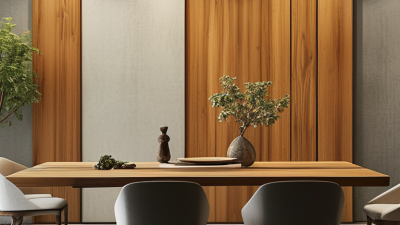
A useful choice starts with the room, not the trend. Grand View Research’s 2024 wood-based panels report valued the global market at about USD 176.9 billion in 2023. It also projects a 6.6% annual growth rate through 2030. That growth brings more finishes, cores, and price points to the market. For a small study, choose a calm grain and lighter veneer to reflect daylight. In a large dining room, darker walnut tones can create depth, but they may absorb visual space. Samples matter. View them beside flooring, curtains, and evening lighting. Not always in a showroom.

Set the budget around performance, not veneer appearance alone. Thin decorative veneer over a stable engineered core often costs less than thicker solid wood elements. Prioritize moisture resistance in kitchens, cleanable finishes in hallways, and acoustic backing in open offices. Budget leaks through unsuitable installation systems and repeated repairs. The USDA Forest Products Laboratory’s 2021 Wood Handbook states that wood reaches fiber saturation near 30% moisture content, after which dimensional movement becomes a major concern. In humid rooms, control moisture before installation. Ask for core specifications, finish durability data, and installation tolerances. Looks are not enough. My own mistake was choosing a dramatic grain without checking its repeat pattern across adjoining panels. The result felt busy under direct light. A measured layout, a physical sample, and a realistic cost allowance usually produce a more convincing result.

How to Choose Modern Wood Veneer Paneling in 2026?

Match veneer paneling to your space, budget, and design goals

Planning benchmarks are indicative supply-only ranges in U.S. dollars per square foot for standard interior veneer panels. Actual pricing varies by panel thickness, backing, finish, quantity, fabrication, freight, and installation. Veneer paneling is not intended for direct wet-area exposure.
Veneer option Typical visual character Indicative material cost Budget level Best design goals Recommended spaces Moisture suitability Durability considerations Maintenance Sustainability considerations
Natural oak veneer Visible grain, warm neutral color, and broad compatibility with contemporary interiors. $5–$15 per sq. ft. Mid-range Warm minimalism, Japandi, Scandinavian, transitional, and light modern interiors. Living rooms, offices, bedrooms, media walls, reception areas, and corridors. Moderate
Use a sealed panel system away from direct water.
★★★★☆
Good everyday performance when properly finished.
Dust with a soft cloth; wipe spills promptly; avoid abrasive cleaners and excessive moisture. Look for responsibly sourced wood and efficient veneer use; the substrate and finish also affect the overall impact.
Natural walnut veneer Deep brown tones with expressive grain and a refined, high-contrast appearance. $8–$20 per sq. ft. Premium Luxury accents, dramatic feature walls, executive interiors, and hospitality-style spaces. Libraries, dining rooms, offices, lounges, hotel interiors, and selective feature panels. Moderate
Requires a suitable finish and controlled indoor conditions.
★★★★☆
Stable for normal interiors when installed over a suitable substrate.
Protect from prolonged direct sunlight; clean with a dry or slightly damp cloth. Because darker species can command higher prices, use strategically on focal surfaces to reduce material volume.
Natural ash veneer Light base color with pronounced open grain and a clean, linear appearance. $5–$14 per sq. ft. Mid-range Bright interiors, biophilic design, contemporary offices, and visually spacious rooms. Home offices, ceilings, kitchens outside splash zones, retail interiors, and wall systems. Moderate
Not suitable for direct splash or standing water.
★★★★☆
Performs well with edge sealing and a quality clear finish.
Open-grain surfaces may show dust more readily; use gentle routine cleaning. Light-colored veneers can reduce the need for opaque coatings while preserving a natural wood appearance.
Natural maple or birch veneer Pale, subtle grain with a calm and uniform look. $4–$12 per sq. ft. Value to mid-range Minimalist, Nordic, compact-space, and cost-conscious modern design. Bedrooms, study areas, cabinetry faces, classrooms, clinics, and small apartments. Moderate
Use only with an appropriate sealed panel specification.
★★★☆☆
Light surfaces can reveal dents, scratches, and uneven staining more visibly.
Use non-abrasive cleaning products; avoid harsh chemicals that can change the pale finish. Efficiently used veneer can provide a real-wood appearance with less solid timber than wide solid-wood boards.
Rift-cut veneer Long, straight grain with a restrained, highly tailored appearance. $6–$18 per sq. ft. Mid-range to premium Architectural lines, fluted compositions, seamless visual rhythm, and modern built-ins. Feature walls, doors, office fronts, media units, and full-height panel layouts. Moderate
Keep away from uncontrolled humidity and direct water.
★★★★☆
Good visual consistency, although installation alignment is important.
Maintain consistent indoor humidity where possible; clean grooves and joints carefully. Choose carefully matched leaves and plan panel layouts to minimize offcuts and visual waste.
Quarter-cut veneer Straight grain with a more formal pattern; some species may display fleck or ray detail. $6–$18 per sq. ft. Mid-range to premium Orderly interiors, classic-modern rooms, symmetrical layouts, and premium cabinetry. Dining rooms, libraries, conference rooms, reception areas, and custom furniture panels. Moderate
Requires sealed edges and a controlled interior environment.
★★★★☆
Stable appearance when the panel is correctly balanced and installed.
Use a soft cloth and avoid placing hot or wet objects directly against the finished surface. Book-matched or sequence-matched layouts can increase waste, so confirm yield before ordering.
Reconstituted wood veneer Manufactured from real wood fibers to create consistent color and repeatable grain patterns. $4–$12 per sq. ft. Value to mid-range Consistent large-scale installations, repeatable patterns, and projects with strict visual uniformity. Commercial corridors, retail displays, offices, hospitality interiors, and large feature walls. Moderate
Use a sealed interior-grade system and avoid wet locations.
★★★★☆
Consistent appearance can simplify replacement and panel matching.
Follow the finish manufacturer’s cleaning instructions; protect exposed edges from moisture. Can improve visual consistency and material yield, but verify the wood source, adhesive, and emissions documentation.
Veneer-faced acoustic panel Real-wood appearance combined with a perforated, slatted, or absorptive backing system. $12–$35 per sq. ft. Premium Acoustic comfort, warm modern architecture, productivity, and hospitality ambience. Home theaters, meeting rooms, restaurants, open-plan offices, studios, and living spaces. Moderate
Use in dry interiors unless a tested specialty specification says otherwise.
★★★★☆
Performance depends on the complete acoustic assembly, not the veneer alone.
Vacuum or dust gently around slats and perforations; avoid saturating acoustic backing materials. Evaluate the full system, including backing composition, recycled content, fire rating, and end-of-life options.
High-pressure laminate with a wood appearance Printed or textured wood visuals with broad pattern consistency and color options. $2–$8 per sq. ft. Value Budget control, high-use surfaces, easy pattern coordination, and simplified maintenance. Busy corridors, commercial cabinetry, education spaces, utility areas, and rental interiors. Higher resistance
More moisture-tolerant than unfinished veneer, but joints and edges still require protection.
★★★★★
Typically resists everyday abrasion better than a standard clear-coated wood veneer.
Easy routine cleaning with a soft cloth and mild cleaner; avoid cutting directly on the surface. It is not real wood veneer; compare recycled content, substrate composition, and disposal requirements.
Quick selection guide: Value Best for tighter budgets and larger coverage areas. Mid-range Balanced appearance, cost, and everyday performance. Premium Higher visual impact, customization, or integrated performance.