
Bamboo Slat Wall Panels are no longer just a decorative trend. They bring warm grain, narrow shadow lines, and a lighter visual rhythm to living rooms, offices, and hospitality spaces. Grand View Research valued the global bamboo market at about US$68.8 billion in 2023 and projected continued growth through 2030. That figure covers a broad market, not wall panels alone, so it should not be read as a panel-sales forecast. Still, it signals wider interest in bamboo-based materials.
“Bamboo is a grass, not a tree.” This familiar distinction, emphasized by bamboo researcher Dr. Walter Liese, matters when comparing products. Strand-woven boards, solid slats, engineered panels, and veneer-faced options differ in appearance, construction, and maintenance needs. Look closely at the finish. Check the backing. Ask how the slats are fixed and whether the product is intended for dry interiors. Small details can change both installation and long-term performance.
This guide compares the top types of Bamboo Slat Wall Panels for 2026, including their visual character, practical strengths, and trade-offs. The categories are useful, but not perfect: product labels vary, and “sustainable” claims need evidence. A panel that looks calm in a showroom may reveal uneven spacing under a side window. That is worth considering. We’ll focus on what buyers can verify, not just what a product promises.
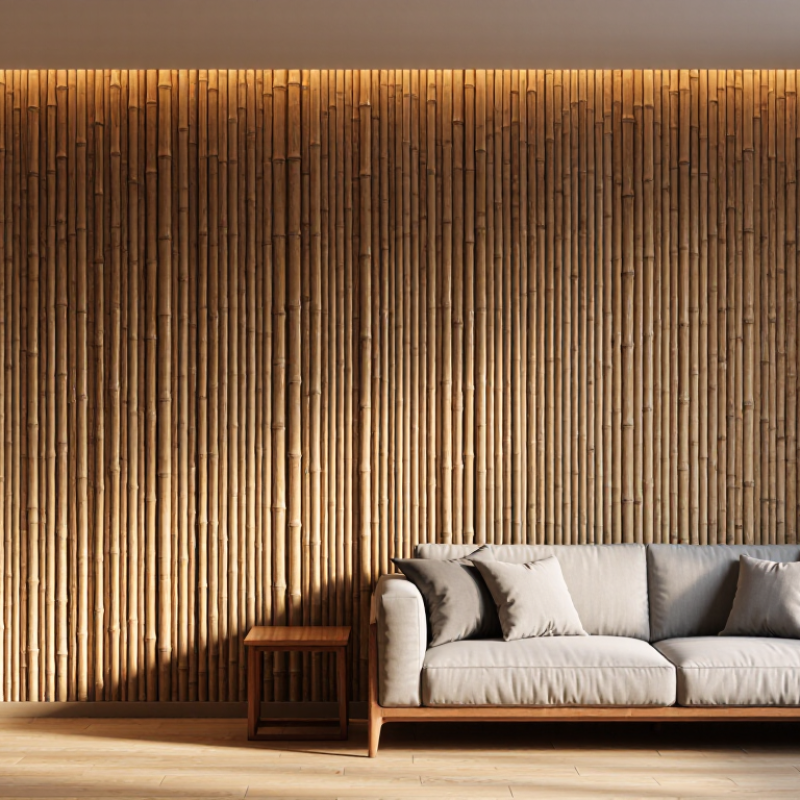
Bamboo slat wall panels are best classified by their construction, backing, and finish—not just by color. Solid or laminated bamboo slats show visible strips and joints, creating a natural, varied surface. Engineered panels use bonded bamboo layers for more consistent dimensions. A third common category pairs decorative slats with a backing, often felt, to simplify mounting and help soften room echo. The labels are not always tidy. Some products combine all three features.
Backing helps distinguish panels designed mainly for appearance from acoustic-style systems. Check the core, slat spacing, and attachment method; a close-up can reveal rough edges or uneven gaps. Also ask how the panel handles humidity, especially near kitchens or exterior walls. FAO’s Global Forest Resources Assessment 2020 reported about 35 million hectares of bamboo forest across reporting countries, reflecting a broad and varied raw-material base. That figure describes bamboo forests, not finished wall-panel output. Classification still depends on the product itself, so compare specifications rather than relying on broad “bamboo panel” labels. I would treat acoustic claims cautiously unless test details are provided.
What Are the Top Types of Bamboo Slat Wall Panels in 2026?
Solid Bamboo Slat Panels and Their Natural Texture
Solid bamboo slat panels let the material’s natural character take center stage. Their narrow strips show fine grain, subtle color shifts, and occasional darker nodes. In daylight, these details cast soft lines of shadow across a wall. Each panel can look a little different. That variation feels inviting, though it may not suit rooms that need a perfectly uniform finish. Check a sample beside the intended wall; showroom lighting can flatten the grain.
Tips: Check that the slats sit evenly and the backing feels stable. Let panels acclimate in the room according to the supplier’s guidance. Dust with a dry cloth, and avoid soaking the surface.
Solid panels can work well in living rooms, hallways, or behind a bed, where texture adds depth without busy patterns. Their appearance depends on slat width, spacing, and finish. A clear finish tends to preserve the visible grain, while a tinted finish can deepen its color. Small details matter. Still, natural variation is not always predictable, and matching panels across a large wall may take extra care. Inspect several pieces together before installation.
| Panel Type | Construction or Defining Feature | Natural Texture and Appearance | Common Interior Uses | Specification Notes |
|---|---|---|---|---|
| Natural Horizontal-Grain Solid Bamboo | Bamboo strips are laminated so the wider face of each strip is visible. | Typically shows distinctive bamboo nodes and a broad, layered grain pattern. Natural color commonly ranges from pale straw to light honey, depending on the material and finish. | Feature walls, reception areas, and other dry interior spaces where a clearly recognizable bamboo pattern is desired. | Node visibility and color vary naturally. Confirm the actual panel dimensions, finish, and installation method with the product specification. |
| Natural Vertical-Grain Solid Bamboo | Bamboo strips are laminated with their narrower edges facing outward. | Usually has a finer, more linear appearance, with less prominent nodes than horizontal-grain construction. | Contemporary interiors, narrow accent walls, and designs that call for a more consistent, understated grain. | Grain orientation describes the arrangement of the bamboo strips; it does not by itself specify the direction in which the finished slats are installed. |
| Carbonized Solid Bamboo | Bamboo is heat-treated during processing to create a darker color before or during panel manufacture. | Often has a warm caramel or medium-brown tone. The underlying grain and node pattern depend on whether the panel is horizontal-grain or vertical-grain. | Interior feature walls and spaces where a darker bamboo tone is preferred without relying solely on a surface color stain. | Carbonized color can vary by product and process. Ask for a sample, and check care and finish instructions before installation. |
| Strand-Woven Bamboo Slats | Bamboo strands are compressed and bonded to form a dense bamboo-based material that can be shaped into slats. | Often displays a varied, interwoven grain rather than the regular node pattern of conventional laminated strips. | Decorative interior cladding where a distinctive, more textured grain is part of the design. | Products may differ in binders, finish, and construction. Review the product’s technical and emissions documentation, especially for interior use. |
| Mixed-Grain or Mixed-Tone Solid Bamboo | Combines different grain orientations, tones, or slat layouts within one design. | Creates visual variation by bringing together linear grain, visible nodes, or contrasting light and dark bamboo tones. | Custom feature walls, entry areas, and interiors intended to emphasize pattern or material variation. | Check sample boards for color and grain consistency. Natural bamboo variation means installed panels may not look identical to a small sample. |
Selection note: These descriptions refer to common construction and appearance categories; some can overlap—for example, a panel may be both carbonized and horizontal-grain. “Solid bamboo” can refer to laminated bamboo strips rather than a single piece of bamboo. Confirm substrate, panel thickness, slat dimensions, finish, backing, and installation requirements for each product. Bamboo panels are generally specified for interior use; use in damp or wet areas requires explicit product approval and suitable installation details.
Engineered bamboo slat panels are made by bonding processed strips or strands into stable boards, then cutting them into narrow, repeatable slats. The construction affects grain, color variation, and edge detail. FAO’s Global Forest Resources Assessment 2020 estimated roughly 35 million hectares of bamboo forest worldwide, underscoring the scale of this renewable resource. That figure does not guarantee a panel’s sustainability; ask suppliers about adhesives, coatings, and sourcing. Details matter.
Pattern choices shape the room as much as the material. Straight, evenly spaced slats create a calm vertical rhythm, while alternating widths add a more crafted look. Shallow grooves can suggest fluting without deep shadows; mixed-depth slats make stronger relief but collect more dust. Herringbone and staggered layouts introduce movement, though precise installation becomes more demanding. A small sample helps, but it can hide the effect of full-wall repetition. Check it beside the actual floor and lighting. I would not choose by color alone: warm lighting can make a pale panel look distinctly golden, and that may not suit every room.
Engineered Bamboo Slat Panels and Pattern Options
This chart compares example narrow, medium, and wide linear slat layouts across a 300 mm panel face. Counts are calculated using a 10 mm gap between slats, with any remaining width left at the edge. These are layout examples, not market-share or sales figures; actual panel specifications vary.
Acoustic bamboo slat panels pair a finished bamboo face with an absorbent backing, often felt. The slats leave narrow gaps that allow some sound to reach the backing, where reflections can be reduced. This can make speech and music feel clearer in a room with hard floors, glass, or bare walls.
That distinction matters. These panels are not a soundproof wall; they do not reliably block noise traveling between rooms.
Performance depends on the full assembly, not just the bamboo. Check the backing material, panel depth, spacing, and any published acoustic test data before choosing a product. A shallow panel installed over a solid surface may behave differently from one mounted with an air gap.
Small details count. For a home office, panels near the main reflection points can help tame a sharp, hollow sound without covering every wall. In a dining area, a few panels may soften conversation, but they will not fix every source of noise.
Installation also deserves care: uneven gaps can look distracting, and cutting panels may expose unfinished edges. Plan around outlets and corners, and confirm the wall can support the panel system. A sample is useful, though a small sample cannot predict how a whole room will sound.
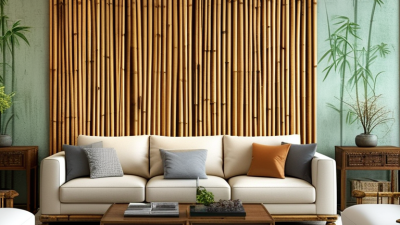
Bamboo slat wall panels differ in both surface and construction. Clear-coated natural slats show the grain and suit living rooms or dry hallways. Carbonized or stained finishes add darker color, but sample them beside your actual lighting; showroom tones can mislead. Laminated veneer panels provide a more uniform face, while solid slats reveal more natural variation. Acoustic panels add a felt backing behind the slats. A useful distinction. Ask for an absorption rating tested to ASTM C423, rather than relying on claims such as “soundproof.” The rating measures sound absorption, not noise blocking between rooms.
Application should guide the finish choice. For kitchens or humid rooms, check the panel maker’s moisture limits and installation details, and avoid assuming a surface coating makes the full assembly waterproof. The USDA Forest Products Laboratory’s Wood Handbook explains how moisture affects wood products; bamboo is a grass, so its panel specifications still need to be checked directly. For sustainability context, UNEP and the Global Alliance for Buildings and Construction report that buildings and construction accounted for 32% of global energy demand and 34% of energy- and process-related CO₂ emissions in 2023. Those figures describe the sector, not bamboo panels specifically. Not a guarantee. Compare documented material sourcing, finish ingredients, and expected service life before treating a panel as a lower-impact choice.