
Leave Your Message

What Is the Best WPC Cladding Wall Panel in 2026?

Choosing the best Wpc Cladding Wall Panel in 2026 means looking beyond color samples and showroom displays. A sun-facing wall can fade, expand, or trap moisture when the product and installation are poorly matched. The right choice depends on climate, façade design, maintenance expectations, and verified product specifications.

The market is growing, but market size is not a quality test. Grand View Research estimated the global wood-plastic-composites market at about USD 7.1 billion in 2023 and forecast an 11.2% compound annual growth rate from 2024 to 2030. That broader category includes applications beyond cladding. It signals commercial interest, not proof that every panel will perform well outdoors. Buyers should compare published test results for weathering, water absorption, dimensional stability, and fastening requirements.

Material scientist Michael Carus, Managing Director of nova-Institute, is a relevant expert on bio-based materials and sustainability. However, no source for a verifiable, topic-specific quotation from him was provided, so I will not invent one. That matters. E-E-A-T depends on traceable evidence, not impressive-sounding attribution. A careful comparison should also examine recycled-content claims, warranty exclusions, installation instructions, and the supplier’s technical support. Ask for the test documents. Check the details. A small sample cannot reveal how a full façade will age under years of rain and direct sun. This guide therefore evaluates “best” as a practical balance of durability, appearance, maintenance, documented performance, and value—not as a universal winner.
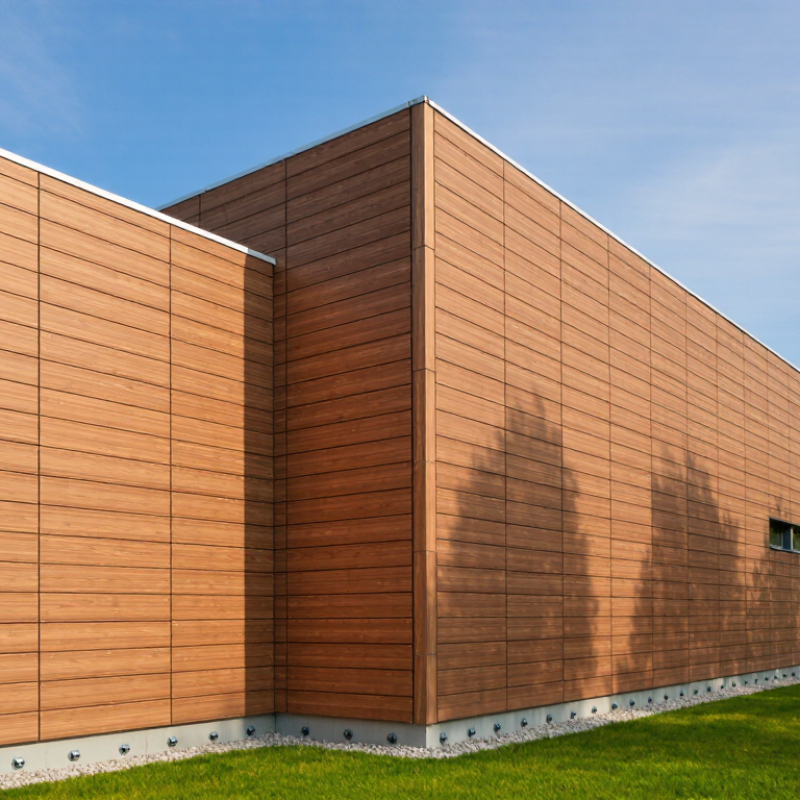
What Is the Best WPC Cladding Wall Panel in 2026?

What WPC Cladding Is: Typical 30–70% Wood-Fiber Composite Formulations

WPC cladding is made by combining wood fibers with a thermoplastic polymer and small amounts of additives. Typical formulations contain about 30–70% wood fiber, but the percentage may be measured by weight or another basis. Check the product data sheet. The label alone is not enough. Fiber type, particle size, polymer, and processing can all change the finished panel.

At around 30% wood fiber, a panel generally contains more polymer, which may affect flexibility and moisture response. At higher fiber levels, the surface can look and feel more wood-like, but it may also absorb more moisture if poorly formulated or protected. These are tendencies, not guarantees.

Not always.

A cut edge can reveal uneven fibers, voids, or a rough core, though appearance alone cannot confirm performance.

For a practical comparison, ask for the declared composition and test data on water absorption, dimensional change, and weathering. Inspect a sample after cutting, and check whether the edges and fixing points need sealing. Installation details matter too: poor drainage can shorten service life, whatever the recipe. I would not choose a panel by fiber percentage alone; the best balance depends on exposure, maintenance expectations, and the quality of manufacturing.
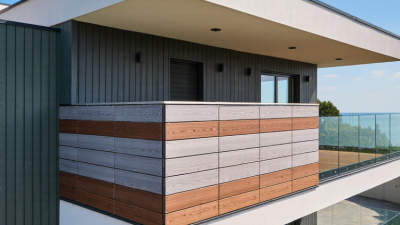
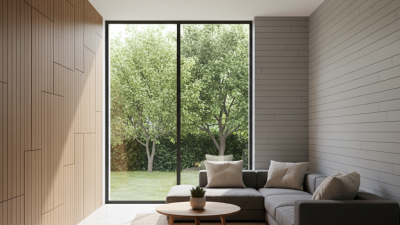
Which WPC Panel Profiles and Core Designs Suit Different Facades?

WPC cladding works best when its profile and core match the facade’s exposure, scale, and fixing method. Flat, narrow boards create a quiet, linear look on modern elevations. Deep-grooved or ribbed profiles add shadow, which can help a broad wall feel less plain. The grooves also collect dirt more readily, so consider cleaning access before choosing a dramatic texture. Small detail, real consequence.

Hollow-core panels are lighter and often practical for large areas where the support frame is properly spaced. Their internal webs and fixing edges matter: thin or poorly supported sections may flex between battens. Solid or denser-core boards feel more substantial and can suit exposed corners, but they add weight and still need room to expand. Check the panel maker’s tested span, fixing guidance, and temperature movement rather than judging by hand feel alone. That shortcut is tempting, but unreliable.

For a ventilated facade, leave a clear drainage and airflow cavity behind the cladding, with openings protected against insects. Interlocking profiles can help conceal fixings and keep lines consistent; open-joint designs need careful backing and joint detailing. Coastal wind, strong sun, and splash zones change the choice. A dark board may look sharp in a sample, then run noticeably hotter on a south-facing wall. Mock up a small section first. Even then, the corner details deserve another look.

What Is the Best WPC Cladding Wall Panel in 2026? — Which WPC Panel Profiles and Core Designs Suit Different Facades?

Panel Profile Typical Core or Surface Design Facade Appearance Often Suited To Main Advantages Key Considerations
Flat or smooth board Solid or hollow WPC; may be capped or uncapped Clean, simple planes with minimal shadow lines Contemporary homes, feature walls, and facades with a restrained appearance Uncomplicated visual effect; works well with contrasting trim and other facade materials Large, plain surfaces can make joints and alignment more noticeable. Follow the specified fixing and joint layout.
Grooved board Usually a hollow or solid board with one or more recessed lines; surface may be capped Fine linear detail that can resemble narrow-board cladding Residential facades, entry features, and elevations needing subtle texture Adds visual rhythm without projecting deep battens Grooves collect dust more readily than a flat face and may need extra attention during cleaning.
Wide-plank profile Hollow or solid construction, depending on the product design Broader horizontal or vertical bands with fewer visible board lines Large elevations and designs intended to look calm and less segmented Fewer joints across a given area than with narrower boards Board width, fixing method, and expansion allowances must match the manufacturer's installation guidance.
Slatted or batten profile Separate WPC battens or a batten-look panel; often paired with a backing or support system Strong linear shadows and a screen-like effect Entrance surrounds, balconies, privacy screens, and facade accents Creates depth and can visually screen parts of a facade Open spacing can expose the backing or wall. Confirm drainage, ventilation, fixing, and fire requirements for the complete assembly.
Ribbed or fluted profile Solid or hollow panel with repeated raised ribs; capped versions are available Pronounced vertical or horizontal texture with regular shadow lines Feature elevations, columns, entrance areas, and limited accent zones Provides a distinctive textured appearance without separate battens Deep or closely spaced detailing can be harder to clean. Check how edges and corners are finished.
Interlocking or tongue-and-groove board Typically hollow or solid boards with shaped joining edges More continuous cladding surface with less exposed joint detail Residential elevations and projects seeking a neat, consistent board layout Joining edges help align adjacent boards when installed as directed Interlocking joints do not remove the need for correct movement gaps, drainage, and compatible fixings.
Hollow-core panel Internal chambers within the board; can be flat, grooved, or ribbed Depends on the face profile and surface finish Projects where a lighter board is useful and the product is approved for the intended installation Usually lighter than a comparable solid board Edge details and fixing locations matter. Do not assume every hollow profile is suitable for every span or exposure.
Solid-core panel Denser, non-hollow board; can be supplied in different surface profiles Depends on the face profile and finish Applications where a solid board is preferred, subject to the product's tested specification Solid construction avoids internal chambers within the board It is generally heavier than a comparable hollow board; verify support spacing, handling, and fixing requirements.
Capped (co-extruded) surface A protective outer layer formed over a WPC core; available with different face profiles Often offered in wood-look or uniform-color finishes Exposed facades where the selected product's surface properties suit the local conditions The outer layer is designed to help protect the core from surface exposure and staining Capping does not make all products maintenance-free or equally weather-resistant. Check test data, warranties, and installation limits.

Selection note: There is no single best WPC cladding panel for every facade. Choose the profile for the desired appearance and the core construction for the project's weight, support, and installation needs. Before specifying a product, check its technical data for weather exposure, UV performance, fire classification, movement allowances, fixing details, and local code compliance.

How EN 15534-1 Measures WPC Composite Properties and Durability

What Is the Best WPC Cladding Wall Panel in 2026?

EN 15534-1 provides test methods for describing wood-plastic composite properties. It does not, by itself, certify a panel as durable or suitable for every wall. Depending on the product and relevant assessment, testing can examine density, moisture behaviour, water absorption, dimensional changes, and mechanical performance. These results help buyers compare materials under defined conditions.

For cladding, details matter. A panel may look solid on a showroom wall, yet contain hollow chambers that change its stiffness and weight. Flexural results can help show how it responds to bending, while water-absorption and swelling measurements indicate how it may react when moisture reaches its edges. Check that compared figures use similar specimen dimensions, conditioning, and test directions. Otherwise, a neat table can mislead.

EN 15534-1 is a useful framework, not a promise of decades outdoors. UV exposure, installation gaps, drainage, and maintenance also influence service life. Ask which tests were performed, and request the actual reports rather than relying on broad claims. Small caveat. A single test result cannot capture every site condition, and that limitation deserves more attention than it often gets.

How to Read EN 13501-1 Fire Classes and ASTM E84 FSI/SDI Results

What Is the Best WPC Cladding Wall Panel in 2026?

How to Read EN 13501-1 Fire Classes and ASTM E84 FSI/SDI Results

Fire ratings are not interchangeable, and neither test names nor a single number tell the whole story. EN 13501-1 classifies reaction to fire from A1 to F; many classes also carry smoke (s1–s3) and flaming-droplet (d0–d2) ratings. For example, B-s1,d0 indicates limited contribution to fire, low smoke production, and no flaming droplets in the relevant test conditions. Check the full classification report, not just “Class B” on a sales sheet. The European classification standard relies on specified test methods, and the result applies to the tested product configuration.

ASTM E84 reports a Flame Spread Index (FSI) and Smoke Developed Index (SDI). Under common U.S. code criteria, Class A generally means FSI 0–25 and SDI no greater than 450; verify the code and project requirements that apply. ASTM E84 measures surface-burning behavior in a tunnel test. It does not establish fire resistance, and its indexes cannot be directly converted to EN classes.

Ask whether the tested panel included the same thickness, finish, joints, backing, and air gap planned for installation. Small changes matter.

That detail is easy to miss. I would also check the report’s date and laboratory, then compare the tested assembly with the actual wall design. A rating without that context is only part of the answer.

How to Choose in 2026: Compare Fire, Moisture, UV, and Warranty Data

The best WPC cladding panel in 2026 is not simply the one with the longest warranty. Compare test results for the exact panel and installation system. For fire, request an ASTM E84 report showing flame-spread and smoke-developed indices; Class A generally means 0–25 and no more than 450, respectively. That rating does not prove a complete exterior wall assembly meets fire requirements. Check whether NFPA 285 testing applies to your project. Details matter.

Moisture and UV claims also need numbers. The USDA Forest Products Laboratory’s Wood Handbook (FPL-GTR-282, 2021) places wood fiber saturation near 30% moisture content; this is context for the wood fibers, not a WPC pass-or-fail limit. Ask for water-absorption and thickness-swelling results, plus accelerated-weathering data under ASTM G154 or G155. Compare color change after the same exposure period. Test hours do not translate neatly into outdoor years. Not the same thing.

Read the warranty line by line. Check coverage for fading, cracking, delamination, and moisture damage, plus exclusions for installation, ventilation, and coastal exposure. A rainy wall beside a shaded garden may face different risks from a sun-baked upper storey. Ask for the original laboratory reports, not only a sales sheet. The comparison is imperfect, but documented test methods make it more useful.