
Leave Your Message

China Best Charcoal Sheet for Wall Manufacturer?

Choosing the China Best Charcoal Sheet For Wall Manufacturer requires more than comparing prices or attractive catalog images. A reliable supplier should show material samples, production experience, acoustic test reports, and stable quality records. The sheet should feel firm, cut cleanly, and keep its charcoal tone under normal indoor lighting. Its backing, thickness, density, and surface finish also affect wall appearance and sound absorption.

Acoustic-materials consultant David Chen says, “A beautiful wall sheet is useful only when its performance survives real installation.” This practical view matters in offices, studios, hotels, restaurants, and residential rooms. Good manufacturers explain how their Charcoal Sheet For Wall handles humidity, cleaning, edge finishing, and long-term attachment. They should also provide clear information about emissions, fire performance, and recommended installation methods. Certifications matter. So does honest communication.

Factory visits can reveal details that websites hide. Watch how workers inspect color, press layers, and pack finished sheets. Ask for recent samples, not only perfect showroom pieces. Small shade differences may appear between production batches. That is not always a failure, but it needs discussion before ordering. Some buyers focus too heavily on the lowest quotation. This can create expensive replacements later.

The strongest manufacturer is not necessarily the largest one. It is the supplier that answers technical questions clearly, accepts reasonable inspection, and supports the product after delivery. This guide examines those practical signals. It also considers customization, minimum order quantities, lead time, and export experience. The evaluation will not pretend that every factory is flawless. Careful comparison remains necessary.
China Best Charcoal Sheet for Wall Manufacturer?

What Are Charcoal Sheets for Walls?

China Best Charcoal Sheet for Wall Manufacturer?

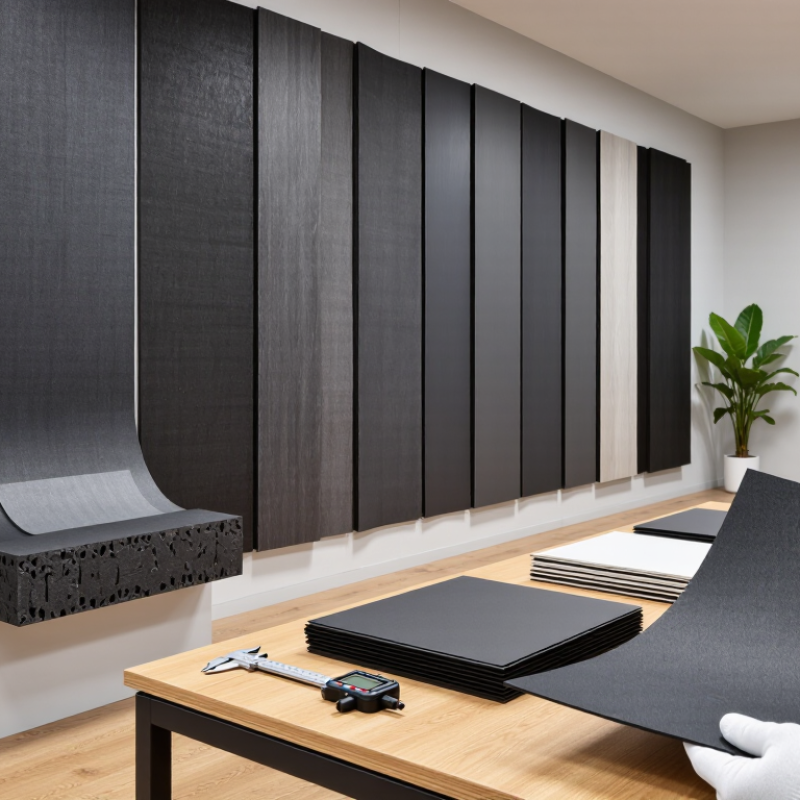
Charcoal sheets for walls are thin decorative or acoustic panels, not sheets made from barbecue charcoal. “Charcoal” usually describes a dark grey finish. The core may contain recycled PET fiber, compressed felt, wood fiber, or mineral material. Some products soften echoes in offices, studios, corridors, and meeting rooms. Others mainly provide visual texture. The name alone proves little.

According to the U.S. Environmental Protection Agency, indoor pollutant levels can be two to five times higher than outdoor levels. Material selection therefore deserves careful checking. Ask for VOC test results, fire classification, moisture resistance, recycled content, and installation instructions. Acoustic performance should reference laboratory testing, such as ISO 354, and include a clear Noise Reduction Coefficient where applicable. A thick panel with spaced backing usually performs better than a thin sheet fixed directly to a hard wall.

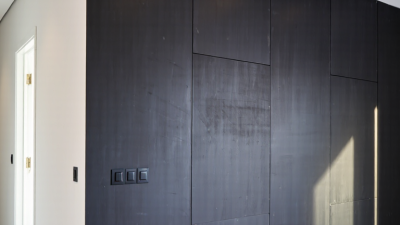
In practical use, charcoal-colored surfaces create a calm, matte appearance and hide minor marks. They can still show pale dust under strong lighting. That detail is easy to overlook. Panels also need accurate cutting around sockets, clean substrates, and suitable adhesive or mechanical fixing. A manufacturer should provide batch consistency data, warranty terms, and maintenance guidance. Environmental product declarations add useful evidence, although they do not automatically prove durability. The term “charcoal sheet” remains inconsistent across suppliers, so comparing test documents matters more than comparing photographs.
How to Identify a Leading Chinese Manufacturer

Choosing the best charcoal sheet for walls starts with the manufacturer, not the catalogue photo.

Industry reports estimate the global acoustic panels market exceeded USD 10 billion in 2023, with steady growth expected through 2030. That growth attracts capable factories and opportunistic traders. A serious Chinese manufacturer should explain its core material, density, surface finish, adhesive system, and production limits clearly.

Ask for recent test reports covering fire performance, formaldehyde emissions, sound absorption, and dimensional stability. ISO 354 testing measures sound absorption, while ISO 16000 methods help assess indoor air pollutants.

Do not accept a generic certificate with no product model or laboratory details. Request production samples from different batches. Compare thickness, edge cutting, color consistency, and odor after unpacking. Small differences matter.

Visit the factory, physically or through a documented video audit. Check automated cutting equipment, dust control, curing areas, warehouse conditions, and final inspection records. The China National Bureau of Statistics continues to show strong manufacturing activity in building-related industries, but output volume alone proves little.

A supplier may have excellent machinery and weak process discipline. I have seen attractive samples hide uneven backing layers. That risk deserves attention.

Confirm minimum order quantities, replacement procedures, packaging strength, and export experience before signing. A leading manufacturer can discuss failure rates, not only success stories.

Materials, Features, and Performance Standards

China Best Charcoal Sheet for Wall Manufacturer?

Materials, Features, and Performance Standards

A dependable charcoal wall sheet begins with its core material. Common options include compressed charcoal fiber, mineral fillers, recycled wood fiber, and a stable polymer binder. The surface may use fabric, decorative paper, or a scratch-resistant coating. Material disclosure matters because “charcoal” can describe appearance, not actual carbon content.

In practical inspections, I check edge density, flatness, odor, and surface bonding. A good sheet should resist warping after humidity changes. It should also keep its color under ordinary indoor lighting. That matters. Some products look excellent at delivery but develop lifted edges later. The backing layer and adhesive compatibility deserve equal attention.

Performance standards should cover fire behavior, volatile organic compound emissions, moisture resistance, acoustic absorption, and dimensional stability. Test reports should identify the sample, method, laboratory, and test date. Ask for values, not vague claims. A low emission result supports healthier interiors, while acoustic data should state the test frequency range. Fire performance depends on the complete wall system, not the sheet alone. Test it.

Thickness, density, and installation method can change performance significantly. A thicker panel may absorb more sound, but it may also require stronger fixing support. I would inspect several production batches before approving a large order. Small differences are easy to miss. That is where my judgment can still be imperfect. Reliable manufacturers welcome independent sampling, clear tolerances, and traceable quality records.

China Best Charcoal Sheet for Wall Manufacturer? - Materials, Features, and Performance Standards

Technical reference table for charcoal-colored architectural wall sheets and PET acoustic panels; actual values depend on construction, thickness, installation, and test conditions.

Evaluation Dimension Typical Material or Specification Common Performance Range or Requirement Practical Wall Application Benefit Relevant Test Method or Standard
Primary Material Thermoformed or compressed polyester fiber, commonly made with partially recycled PET fibers. Fiber-based sheet with a dense, porous structure; recycled content varies by product and production process. Lightweight, easy to cut, and suitable for decorative wall cladding and acoustic treatments. Material composition should be verified through supplier technical documentation or laboratory analysis.
Standard Thickness Common thicknesses include 6 mm, 9 mm, 12 mm, 18 mm, and 24 mm. Thicker panels generally provide better low-frequency sound absorption and improved visual relief. 6–12 mm is often used for decorative wall covering; 18–24 mm is more suitable for acoustic applications. Dimensional measurements may be checked according to applicable product specifications and ISO 4593 principles.
Panel Dimensions Frequently supplied in large sheets such as approximately 1220 × 2440 mm or other project-specific sizes. Dimensional tolerance is normally controlled by the manufacturer and should be stated on the product datasheet. Large sheets reduce the number of joints and can improve installation efficiency. Project drawings and approved samples should define allowable length, width, squareness, and thickness tolerances.
Density Typical PET acoustic sheet density is approximately 180–250 kg/m³, depending on thickness and forming process. Higher density can improve rigidity and impact resistance, while excessive density may reduce sound absorption in some frequency bands. Provides a balance between panel stability, handling weight, and acoustic performance. Density can be calculated from mass and volume or tested using laboratory material characterization procedures.
Surface Finish Charcoal, dark gray, graphite, or other solution-dyed or surface-finished colors; smooth, textured, grooved, or molded surfaces are available. Color uniformity and surface texture should be checked against an approved production sample. Dark finishes conceal minor marks and coordinate with modern commercial, hospitality, and residential interiors. Color assessment may use an agreed color sample, visual inspection, or instrumental color measurement.
Sound Absorption Open-fiber structure absorbs airborne sound by converting acoustic energy into low-level heat within the material. Typical NRC values may range from approximately 0.35–0.90, depending on thickness, air gap, surface pattern, and mounting method. Helps reduce reverberation and speech noise in offices, classrooms, studios, restaurants, and public interiors. ASTM C423, ISO 354, or equivalent reverberation-room testing; reported results must include mounting conditions.
Fire Performance Fire behavior depends on fiber type, additives, facing, backing, thickness, and installation system. Products may be tested for flame spread and smoke development; no fire rating should be assumed without a valid test report. Supports specification for interior wall systems where fire performance documentation is required. ASTM E84 for flame spread and smoke-developed index; EN 13501-1 for European reaction-to-fire classification.
Formaldehyde and VOC Emissions Polyester-based sheets generally do not require added formaldehyde as a structural binder, but coatings, adhesives, and backing materials may affect emissions. Low-emission products should be supported by independent chamber testing and adhesive documentation. Helps meet indoor air-quality requirements in occupied buildings when the complete wall assembly is evaluated. EN 717-1 for formaldehyde emissions from wood-based products; ISO 16000 series or equivalent VOC chamber methods.
Moisture Resistance Polyester fibers are not readily soluble in water, but porous sheets can absorb surface moisture and may retain water if poorly ventilated. Suitable mainly for dry interior areas; wet-room use requires product-specific validation and protected detailing. Can be used on interior walls without the swelling behavior associated with some untreated wood-fiber boards. Water absorption and dimensional change should be tested using a method appropriate to the product construction.
Dimensional Stability Thermally bonded polyester sheets normally have good stability under ordinary indoor conditions. Performance depends on temperature, humidity, internal stress, and fixing method; allow movement at large joints where required. Reduces the risk of visible buckling or open joints during normal interior use. ASTM D1037 or equivalent conditioning and dimensional-change procedures may be used where applicable.
Impact and Abrasion Resistance Resilient fiber structure provides moderate resistance to incidental impact; textured or laminated surfaces may improve durability. Not normally intended as a heavy-duty protective wall panel unless specifically reinforced and tested. Appropriate for offices, meeting rooms, retail interiors, and other areas with normal pedestrian contact. Project-specific impact, abrasion, or surface durability testing should be requested for high-traffic locations.
Installation Methods Common methods include construction adhesive, mechanical clips, screws with washers, concealed framing, or a combination of systems. Substrate must be clean, dry, flat, and structurally suitable; adhesive compatibility should be confirmed before installation. Allows direct fixing to walls or installation as removable acoustic modules, depending on the design. Follow the approved installation method, substrate requirements, and local building regulations.
Workability Can generally be cut, routed, perforated, grooved, or CNC-machined with suitable tools. Clean cutting depends on blade selection, feed speed, sheet density, and edge design. Facilitates custom shapes, service openings, curved layouts, and decorative geometric patterns. Use manufacturer-recommended cutting parameters and verify edge quality on a sample panel.
Maintenance Routine cleaning is usually performed with a soft brush, vacuum cleaner, or low-moisture method. Avoid aggressive solvents, excessive water, and high-temperature steam unless specifically approved. Simple maintenance helps preserve the appearance and acoustic surface over the service life. Cleaning procedures should be based on the product care guide and the installed surface finish.
Sustainability Considerations May contain recycled PET content and can have a comparatively low material weight; recyclability depends on additives and bonded components. Recycled content and end-of-life claims should be supported by verifiable documentation rather than color or appearance. Can contribute to material-efficiency and green-building documentation when the complete assembly is properly documented. Request recycled-content declarations, environmental product documentation, and project-specific green-building evidence where required.

Note: The values shown are typical reference ranges for charcoal-colored polyester acoustic wall sheets and related interior panels. Final selection should be based on the certified technical datasheet, complete wall assembly, local code requirements, installation conditions, and independent test reports.

Manufacturing Processes and Customization Options

Choosing the best charcoal sheet for a wall requires more than comparing price and color. Manufacturing control matters. Experienced producers usually carbonize selected plant-based material at controlled temperatures. The char is then cleaned, milled, and blended with a measured binder. The mixture is pressed into sheets under controlled pressure. After curing, panels are trimmed, sanded, and inspected for thickness, flatness, and edge quality.

Customization begins with dimensions. Common requests include different lengths, widths, thicknesses, surface textures, and edge profiles. Some projects need a smooth dark finish, while others prefer visible grains or a fabric-like pattern. Perforated designs can support decorative effects and acoustic planning. Decorative films, wood veneers, and mineral coatings may also be considered. However, every added layer can affect weight, bonding, moisture resistance, and cutting performance.

Good suppliers should provide samples before production. Ask for density data, emissions information, moisture testing, and relevant fire-performance documents. Batch records improve traceability when large wall areas are installed. In practical use, I would check a cut edge because weak bonding often appears there first. One lesson is easy to miss: a beautiful panel may still fail if the wall is damp or uneven. Tolerances should be agreed in writing. Small color differences can occur between batches, so approved samples deserve careful storage.

China Best Charcoal Sheet for Wall Manufacturer? – Manufacturing Processes and Customization Options

The chart presents common nominal thickness options used for charcoal-finish wall sheets. A typical production workflow includes raw-material preparation, mixing or fiber forming, hot pressing, curing, surface finishing, precision cutting, and quality inspection. Thickness, sheet size, edge profile, surface texture, color, perforation pattern, and fire or acoustic performance can be customized according to project requirements. Actual specifications vary by material formulation and manufacturer.

How to Evaluate Suppliers and Choose the Right Partner

China Best Charcoal Sheet for Wall Manufacturer?

How to Evaluate Suppliers and Choose the Right Partner

The best supplier is not always the one offering the lowest quotation. For charcoal wall sheets, evaluate material density, surface consistency, thickness, and dimensional tolerance. Ask for a current technical data sheet, not a copied brochure. Check formal test reports for fire performance, formaldehyde emissions, and sound absorption when these properties matter. Requirements vary by project and market.

Request samples from different production batches. Inspect the edges, backing, color, and cutting quality under bright light. Try a simple moisture check if the sheets will enter a humid interior. A capable manufacturer should explain its raw materials, inspection process, packaging method, and replacement policy clearly. Factory photos help, but an independent inspection gives stronger evidence. Video calls can reveal useful details, though they are not perfect.

“I once treated a polished sample as proof of stable production. That was too optimistic. Batch control matters more than presentation. Ask about lead times during peak seasons, minimum order quantities, custom sizes, and installation guidance. Confirm whether cartons protect corners during long-distance transport. Communication speed is useful, but accurate answers matter more. A reliable partner shares realistic limits, records quality checks, and corrects mistakes without hiding them.

Keep a written specification and approve a pre-production sample before placing a large order.