
Leave Your Message
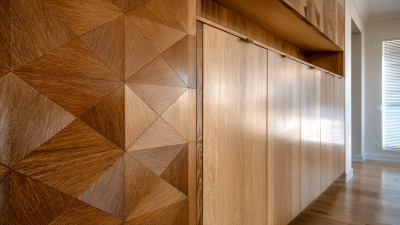
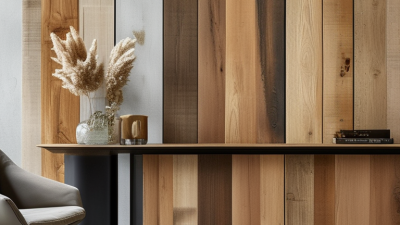
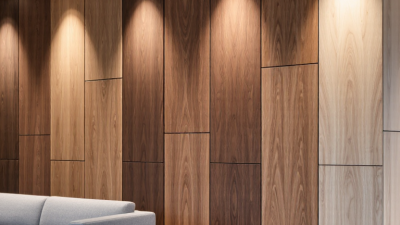
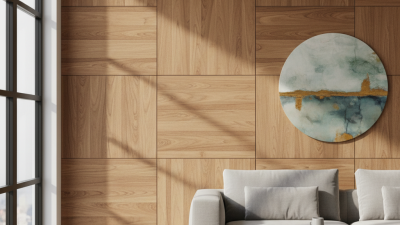
In 2026, global buyers are looking for Timber Veneer Wall Panels that balance natural character with dependable performance. A veneer’s appeal begins with its grain: a pale oak face can brighten a compact hotel corridor, while smoked walnut can bring depth to a boardroom. But appearance is only part of the decision. Buyers also need to examine substrate stability, veneer thickness, finish quality, installation requirements, and consistency between samples and production batches. Small details matter. A mismatched grain can be hard to ignore across a long wall.
Architect Frank Lloyd Wright once described wood as “the most humanly intimate of all materials.” His observation captures wood’s lasting appeal, though it does not answer every sourcing question. Veneer is a crafted surface, not solid timber, and its performance depends on materials, manufacturing, and site conditions. Buyers should ask for clear product specifications, sample panels, and care guidance before placing large orders. Certifications and documentation can help, but they deserve careful review rather than automatic trust. No panel is perfect. Even a well-made finish may vary slightly across batches, and that deserves honest discussion.
This guide compares leading options for international projects, from species and finishes to construction, maintenance, and supplier evaluation. It is designed to help architects, contractors, and distributors ask sharper questions before choosing panels. Trends can be useful. They are not a substitute for checking the details.
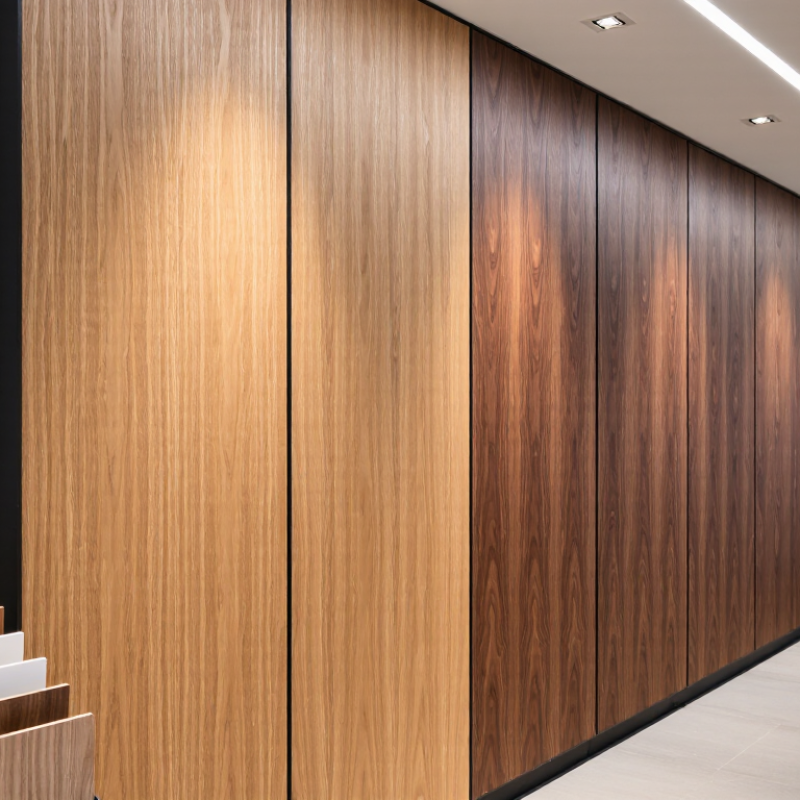
Timber veneer wall panels use a thin layer of real wood bonded to a stable backing. The visible veneer provides natural grain and color, while the core supports the panel and helps it stay flat. Common cores include plywood, medium-density fiberboard, and particleboard. Each behaves differently: plywood often holds screws well, while fiberboard offers a smooth face for precise finishing. Solid wood? Not quite. Veneer is genuine wood, but the panel is a composite product.
Panel construction usually includes the veneer, core, adhesive, and sometimes a balancing layer on the back. A protective finish may reduce staining and everyday wear, but it does not make every panel suitable for damp rooms. Check product specifications for core type, veneer thickness, finish, and installation conditions. On a sample, look closely at grain continuity and edge treatment. A polished sample can still mislead.
Tips: Ask for a physical sample and inspect it under the room’s lighting. Compare the front veneer with the exposed edge, and confirm how panels should be acclimated before installation. Small details matter. Also verify that the specified adhesive and substrate match the intended wall and indoor conditions; otherwise, movement or visible seams may appear later.
| Panel Type | Definition and Typical Structure | Key Materials | Typical Strengths | Important Buyer Checks | Common Applications |
|---|---|---|---|---|---|
| Veneered plywood panel | A decorative real-wood veneer is bonded to a plywood core made from layers of wood veneer, typically arranged with alternating grain directions. | Natural wood face veneer, plywood core, adhesive, and a specified surface finish. | Good dimensional stability and a familiar wood appearance; suitable for many interior wall applications. | Confirm core grade, panel thickness, veneer matching, adhesive emissions documentation, and suitability for the intended moisture conditions. | Interior feature walls, reception areas, meeting rooms, and residential wall cladding. |
| Veneered MDF panel | A real-wood veneer is bonded to medium-density fibreboard, a uniform engineered panel made from wood fibres and resin. | Wood veneer, MDF core, adhesive, and optional lacquer, oil, or other specified finish. | Uniform surface and edges can support precise machining and consistent decorative finishes. | Standard MDF is not waterproof. Check moisture classification, edge sealing, weight, emissions requirements, and installation conditions. | Interior wall panels, decorative screens, joinery, and fitted interior features in dry spaces. |
| Veneered particleboard panel | A decorative wood veneer is applied to a core made from bonded wood particles. Core density and particle distribution vary by product. | Wood veneer, particleboard core, adhesive, and surface finish. | Can be a practical option for flat interior surfaces where the specified core and loading conditions are appropriate. | Check edge durability, fixing requirements, panel weight, moisture classification, and whether the panel is intended for wall use. | Decorative interior walls and non-structural fit-out applications. |
| Veneered fire-rated panel system | A veneer-faced panel supplied as part of a tested or classified assembly. Fire performance depends on the complete product and, where relevant, its installation. | Wood veneer, specified core, adhesives, finish, and any components included in the tested assembly. | May meet project fire-performance requirements when the exact product and installation correspond to the applicable test or classification. | Request current test or classification documents for the exact panel build-up, thickness, finish, and installation method. Do not infer a rating from the veneer alone. | Commercial interiors and projects with specified fire-performance requirements. |
| Veneered moisture-resistant panel | A veneer-faced panel made with a core or construction specified for improved performance in defined humid or damp conditions. | Wood veneer, moisture-resistant plywood or engineered-wood core, suitable adhesive, and protective finish. | Can be more appropriate than standard interior-grade panels in environments with elevated humidity, when used within its stated limits. | “Moisture-resistant” does not mean waterproof. Confirm the product’s classification, edge treatment, finish, installation details, and exposure limits. | Selected interior areas with higher humidity, subject to manufacturer specifications and local requirements. |
| Matching veneer panels | Panels are selected and laid out to coordinate grain appearance across a wall. Matching describes the visual arrangement, not the core material. | Selected natural veneer leaves, a specified panel core, adhesive, and finish. | Can create a more continuous or intentionally patterned appearance across multiple panels. | Agree on veneer species, cut, grain sequence, colour variation, panel numbering, and acceptable natural characteristics before production. | Feature walls, boardrooms, lobbies, and other design-led interiors. |
Material note: Timber veneer is a thin layer of real wood bonded to a supporting substrate. Veneer thickness, species, cut, core construction, finishes, and panel dimensions vary by supplier and specification. Confirm technical data, applicable emissions and fire requirements, and installation instructions for the destination market before ordering.