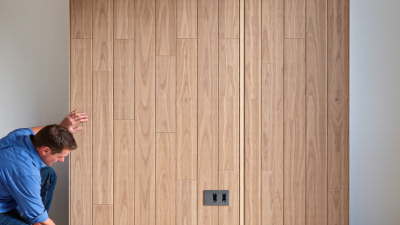
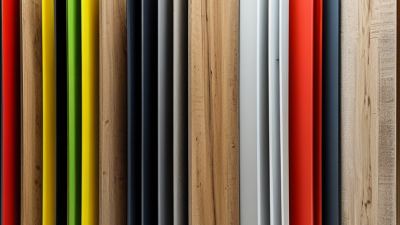
Best WPC Wall Panel Board for Global Buyers in 2026
Choosing the Best WPC Wall Panel Board for Global Buyers in 2026 takes more than comparing colors and quoted prices. Buyers need to assess the panel’s composition, dimensions, surface finish, installation method, and suitability for the intended space. A board that looks convincing in a small sample may behave differently across a large wall.
Details matter. A lot.
This guide outlines practical points for comparing products and suppliers, from wood-plastic composition and profile design to packaging, delivery, and after-sales support. It also explains why clear technical data is useful: ask for product specifications, care instructions, and relevant test reports, then check that they match the actual item being offered. For projects involving moisture, temperature changes, or frequent cleaning, confirm the manufacturer’s stated limits rather than relying on broad claims.
There is no single Wpc Wall Panel Board that suits every market or building. A smooth finish may fit a quiet office, while a textured surface can better complement a feature wall. Still, texture alone does not establish durability, and a low price may not include trims or installation guidance. Those details can be easy to miss. This comparison is intended to help importers, distributors, designers, and project buyers ask better questions before placing an order. Supplier documents deserve careful review, but they are not a substitute for checking samples and confirming project requirements. Some decisions remain uncertain until the material is installed. That is worth acknowledging.
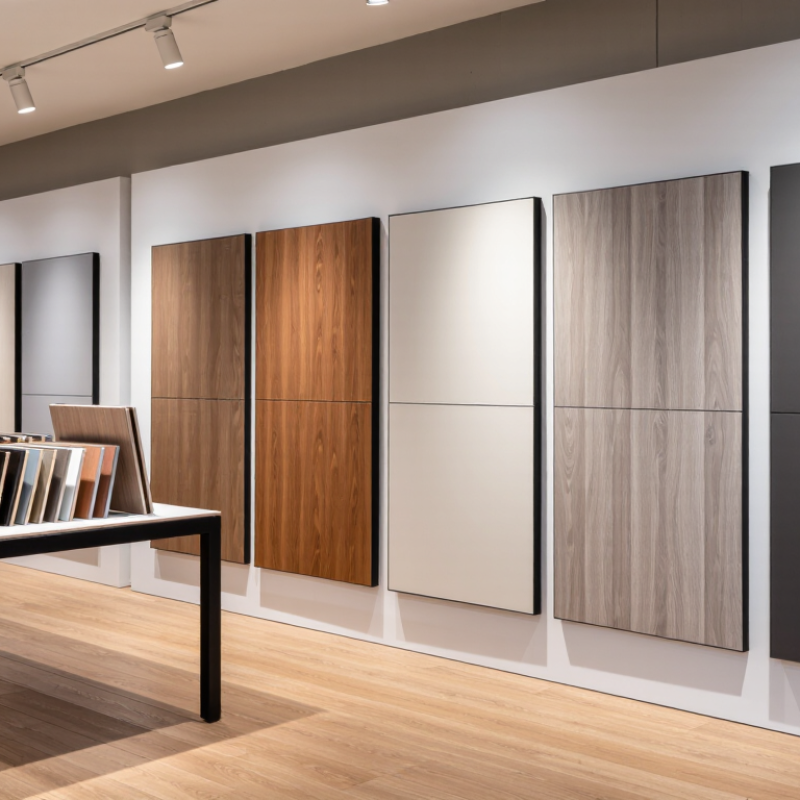
What Is a WPC Wall Panel Board and How Is It Made?
A WPC wall panel board is a shaped building product made from wood fibers or flour mixed with thermoplastic resin. The wood gives the surface a natural-looking texture, while the polymer binds the ingredients together. Small amounts of stabilizers, pigments, or processing aids may also be included. The recipe varies by manufacturer, so “WPC” does not describe one fixed material.
Production usually begins with drying and blending the wood particles and polymer. The mixture is heated, then pushed through a shaped die or pressed into a panel. Cooling sets its profile; cutting and surface finishing create boards ready for installation. You may see embossed grain, smooth faces, or hollow channels along the back. Details matter. Uneven mixing or poor temperature control can affect color, dimensions, and strength.
A practical check is to ask for the product’s technical data, installation guidance, and test information. Recycled content, moisture resistance, and fire performance can differ between products. WPC can tolerate damp conditions better than many untreated wood surfaces, but it is not automatically waterproof. Seams, wall preparation, ventilation, and room conditions still matter. I would not judge a panel by appearance alone; a realistic wood grain can hide a weak core.
How to Compare Quality, Performance, and Environmental Claims
Best WPC Wall Panel Board for Global Buyers in 2026
How to Compare Quality, Performance, and Environmental Claims
Compare panels using measurable evidence, not showroom appearance alone. Check thickness, mass per square metre, profile consistency, and surface finish. Ask for test reports covering water absorption, dimensional change, impact resistance, and UV ageing. ASTM D7031 provides guidance for evaluating physical and mechanical properties of wood-plastic composite products. However, confirm that the tested product matches the panel you plan to buy. A report for a different formulation proves little.
Environmental claims also need context. The UN Environment Programme and GlobalABC reported that buildings and construction produced 37% of global energy- and process-related CO₂ emissions in 2022. This sector-wide figure does not prove that WPC panels have a lower footprint. Request documented recycled-content figures, material traceability, and a life-cycle assessment with clear boundaries. A recycled-content percentage alone is not proof of lower impact. End-of-life options matter, too, and can be unclear in mixed-material products.
Tips: Compare samples after wetting and drying them, and inspect cut edges for voids or uneven composition. Ask suppliers for batch-level quality records and the exact test methods used. If a claim sounds unusually broad, pause. I would also check whether installation requirements affect the stated performance; buyers sometimes overlook that detail.
Which Standards and Certifications Matter to Global Buyers in 2026?
Best WPC Wall Panel Board for Global Buyers in 2026
For global buyers, the right standards depend on the destination market and the panel’s intended use. Start with fire-performance requirements. Ask for a report to a recognized method, such as EN 13501-1 or ASTM E84, where relevant. Check that it covers the exact panel thickness, finish, mounting method, and substrate. A result for a different assembly may not represent your installation.
Chemical-emissions requirements also vary. Request applicable test reports for substances such as formaldehyde, and verify the test method and product scope. ISO 9001 can indicate a supplier’s quality-management system, but it is not product certification. Likewise, a sustainability label may apply only to the wood content, not the complete WPC board. Paperwork can look reassuring. It can still miss the actual wall build-up. Ask whether reports come from a competent independent laboratory, and check dates, sample identification, and traceability. Requirements change; confirm them with your importer or local technical adviser.
Tips: Request complete reports, not just certificate images. Match every document to the product code and installation details. If a supplier cannot explain a test’s limits, pause and verify before ordering.
How to Evaluate Suppliers, Costs, Installation, and Long-Term Care
Choosing WPC wall panels in 2026 starts with evidence, not glossy photographs. Ask suppliers for a current technical sheet, sample pieces, and test information on water absorption, impact resistance, and color stability. Check the panel’s dimensions against the stated tolerances. A sample can reveal uneven edges, hollow spots, or a finish that looks different in daylight. Small details matter. Confirm what the quoted price includes: panels, trims, fasteners, packaging, and delivery. Shipping and cutting waste can change the project cost more than expected.
Installation depends on the wall and the panel system. Check whether the surface must be flat, dry, or supported by battens. Leave the expansion gaps specified by the manufacturer, especially where temperatures vary. Measure twice. A neat layout around corners, sockets, and door frames takes planning; rushed cuts are hard to hide. Ask suppliers for written installation instructions and replacement-part availability. These answers often reveal how useful their technical support will be after delivery.
Long-term care is usually simple, but not maintenance-free. Dust panels with a soft cloth and use mild soap for marks. Avoid abrasive pads unless the care guide explicitly permits them. Keep the product information for future repairs. One point is easy to overlook: indoor panels may not suit damp or sun-exposed areas. Verify the intended application before ordering, since product limits differ and a low initial price can become an expensive mismatch.