
Leave Your Message

China Top WPC Decor Wall Panel Suppliers?

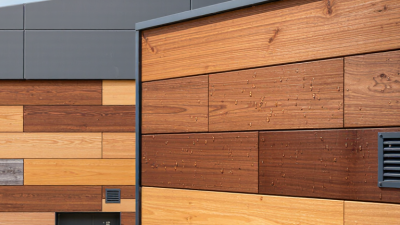
Choosing among China’s top WPC decor wall panel suppliers takes more than comparing catalog photos. A Wpc Decor Wall Panel may look convincing online, yet its finish, edge quality, and color can feel different in person. Ask suppliers for physical samples, current product specifications, and clear installation guidance. A few details matter on site: panel thickness, surface texture, joining method, and how the material responds to moisture and temperature changes. Check these against the room’s intended use, not just the showroom display. Small differences show.

This guide explores how to identify capable Chinese suppliers and what to verify before requesting a quotation. It considers product range, manufacturing experience, sample quality, customization options, communication, and after-sales support. Buyers can also ask about production capacity, packaging, lead times, and quality checks. Specific answers are more useful than broad promises. Where available, review company records and independent customer feedback, and confirm that claims match the documents provided. Do not treat any supplier list as a guaranteed ranking: product lines and service standards can change, and a good fit depends on project needs. A low price alone may hide trade-offs in finish consistency or delivery planning. Sometimes, even a carefully reviewed sample cannot reveal how a large batch will look. That uncertainty deserves attention. Use the comparison as a starting point, request written terms, and verify key details directly with each supplier before placing an order.

China Top WPC Decor Wall Panel Suppliers?

What Defines a WPC Decorative Wall Panel and Its Core Materials?

A WPC decorative wall panel is a building finish made by combining wood-based material with thermoplastic resin. It is designed to provide a wood-like appearance in a manufactured profile.

The wood component is usually fine flour or fibers; the plastic commonly includes polyethylene, polypropylene, or PVC. Formulations vary. Mineral fillers, pigments, UV stabilizers, and coupling agents may also be added to improve processing, color consistency, or bonding between wood and polymer.

Exact recipes are often proprietary, so buyers should request a technical data sheet rather than assume all WPC panels perform alike.

MarketsandMarkets reported that the global wood-plastic composites market was valued at about USD 7.1 billion in 2023 and projected to reach USD 10.5 billion by 2028. This figure covers multiple WPC applications, not decorative wall panels alone.

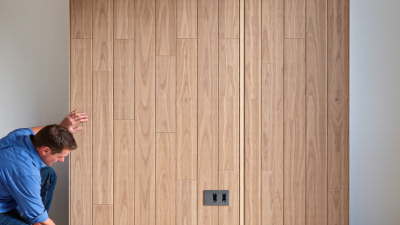
For a wall product, check the stated wood-to-plastic composition, panel dimensions, and installation details. A smooth embossed face may look convincingly like grain, while a cut edge can reveal the composite core. Small detail, big clue.

Moisture resistance and dimensional stability depend on the full formulation and installation, not just the WPC label. I would not treat “waterproof” as a given without product-specific test data.
Which EN 15534-1 Tests Help Assess WPC Profile Quality?

EN 15534-1 provides methods for characterising wood-plastic composite profiles; it does not offer one universal pass mark. Useful checks include density, moisture content, water absorption, dimensional swelling, and flexural strength and stiffness. Together, these results show whether a profile is consistent and how it may respond to wetting or bending. Small differences matter. Compare samples made from the same production batch, and record conditioning and test direction. Otherwise, apparently conflicting results may reflect different procedures rather than better material.

Grand View Research’s 2024 Wood Plastic Composite Market report valued the global market at about USD 7.1 billion in 2023 and forecast 11.4% annual growth through 2030. That estimate signals expanding demand, not verified profile performance. For purchasing decisions, request laboratory results that identify the EN 15534-1 methods used, sample dimensions, and measured values—not just a “compliant” claim. A flexural result alone cannot predict long-term weathering or installation quality. That is not enough. Check the relevant product requirements and intended application too; laboratory data can guide selection, but site conditions still matter.

China Top WPC Decor Wall Panel Suppliers? - Which EN 15534-1 Tests Help Assess WPC Profile Quality?

Use this checklist to compare WPC wall-panel profile test reports. EN 15534-1 describes test methods for wood-plastic composites; it does not, by itself, set universal pass/fail limits for every wall-panel product. Confirm the applicable product requirements, test conditions, specimen details, and acceptance criteria with the project specification and relevant product standard.

Test or report item What it assesses Useful information to request Why it matters for wall panels How to review the result
Dimensions and dimensional tolerances Profile width, thickness, length, and dimensional consistency. Measured values, nominal dimensions, measurement locations, sample count, and stated tolerances. Consistent dimensions support reliable alignment, joint fit, and installation. Compare measured values with the product drawing and purchase specification; do not assume one tolerance applies to all profiles.
Mass per unit length and density The mass of the profile and, where determined, the material density. Test method, specimen dimensions, conditioning, individual readings, and calculation basis. Can help identify production variation and compare profiles with the same design and construction. Compare like-for-like profiles. Density alone does not establish strength or durability.
Water absorption and thickness swelling Changes in mass and dimensions after exposure to water under the stated test conditions. Water exposure conditions, duration, specimen preparation, initial and final measurements, and calculation method. Relevant to dimensional stability in humid or wet service environments. Compare results only when exposure conditions and specimen preparation are comparable; use the project’s specified limits.
Flexural properties Resistance to bending, reported using the test’s specified loading arrangement and calculations. Specimen orientation, span, loading rate, conditioning, number of specimens, and reported strength or modulus. Helps assess profile stiffness and resistance to bending loads during handling and service. Check that the specimen represents the actual profile and that test setup and units are stated.
Tensile properties Response to pulling loads, including the reported tensile strength and/or modulus where applicable. Specimen type and orientation, test rate, conditioning, number of specimens, and failure description. Provides information about material behavior under tension; it does not replace testing of fixings or installed assemblies. Confirm the reported method is appropriate for the material specimen and compare against stated product requirements.
Impact resistance Resistance to impact under the particular test configuration and conditioning used. Impact method, specimen geometry, impact conditions, conditioning, failure criteria, and results. Can inform assessment of damage risk during transport, installation, or use. Do not compare values from different impact methods or specimen configurations as if they were equivalent.
Thermal expansion Dimensional change associated with temperature change under the stated test conditions. Temperature range, specimen direction, conditioning, calculation method, and reported expansion value. Supports decisions about joint spacing, fixing details, and installation allowances. Use the result together with the profile length and expected service-temperature range when reviewing installation details.
Biological durability, where relevant Resistance to the biological agents and exposure conditions covered by the selected test method. Organism or exposure type, test duration, specimen preparation, evaluation method, and applicable classification or criteria. May be relevant to the intended use and moisture exposure; a test result does not automatically establish suitability for every environment. Check that the test addresses the project’s actual exposure conditions and that any classification is supported by the cited method.
Test report traceability Whether the reported results can be linked to the supplied profile and a clearly identified test procedure. Report date, standard edition, laboratory details, sample identification, conditioning, raw or individual results, and deviations. Helps establish that the evidence relates to the product being evaluated rather than an unidentified material or different profile. Request the full report and verify that product construction, profile geometry, and test scope match the proposed supply.

Practical note: For WPC cladding or decorative wall-panel profiles, review EN 15534-1 test evidence alongside the applicable product requirements, installation instructions, and project-specific acceptance criteria. A test method describes how a property is measured; it does not automatically certify a product or establish a universal quality threshold.

How EN 13501-1 Fire Classes (A1–F, s1–s3, d0–d2) Guide Selection

China Top WPC Decor Wall Panel Suppliers?

EN 13501-1 fire classes help buyers compare wall panels, but the letters need careful reading. The main rating runs from A1 to F. A1 indicates no contribution to fire under the classification criteria, while lower classes indicate greater potential contribution. Smoke is recorded separately: s1 means limited smoke production, and s3 indicates no such limitation. Droplet ratings also matter. d0 means no flaming droplets or particles during the test period; d2 allows them.

A supplier’s rating should match the exact panel being considered, not just a similar product. Ask for the classification report and check the tested thickness, surface finish, substrate, and installation method. A change in backing or air gap can affect how a system performs. Small details matter. For a corridor, smoke and flaming droplets may be practical concerns alongside the main fire class. Specifications can look tidy on paper; real walls have joints, corners, and fixings.

I would not treat one rating as a complete safety decision. Confirm project requirements with a qualified fire professional, and verify that the proposed installation matches the tested configuration.

How ISO 4892-2:2013 Xenon-Arc Testing Evaluates UV Weathering

China Top WPC Decor Wall Panel Suppliers?
How ISO 4892-2:2013 Xenon-Arc Testing Evaluates UV Weathering

For buyers comparing WPC decorative wall panel suppliers, a xenon-arc report offers more than a “UV-resistant” claim. ISO 4892-2:2013 describes laboratory exposure methods using xenon lamps to reproduce sunlight, with filters and controlled heat and moisture. The standard provides test procedures, not a universal pass score. Results depend on the chosen cycle, irradiance, and exposure duration, so compare those details before comparing suppliers.

The NREL-published ASTM G173 reference spectrum sets global tilted solar irradiance at 1,000 W/m² under air-mass 1.5 conditions. This is a laboratory reference, not a direct prediction of a wall panel’s service life. In testing, record radiant exposure, color change, surface chalking, cracking, and any loss of mechanical strength. Small details matter: a pale panel may fade visibly, while a darker panel can heat more under the same lamp. Look for before-and-after photographs and actual measurement values. A single “passed” label tells little. That’s the limitation. Real walls also face shade, installation differences, dirt, and changing weather; xenon-arc results help compare materials, but they cannot promise an exact number of outdoor years.

How to Compare China Suppliers by ISO 9001:2015, Capacity, and Export Records

When comparing China WPC decor wall panel suppliers, treat ISO 9001:2015 as a starting point, not a guarantee. Request the certificate number, issuing body, validity dates, and the production site it covers. Check whether its stated scope includes the panels you plan to buy. Small details matter. A certificate alone cannot show how carefully a factory controls color, thickness, or surface finish.

Ask for monthly capacity, current lead times, and the number of production lines used for WPC panels. Compare these figures with a recent production schedule or a live video walkthrough. A large capacity claim can be misleading if several product types share the same lines. Request samples from regular production, not only polished showroom pieces. Even then, one sample may not reveal batch variation.

Review export records for products similar to yours, and ask for redacted shipping documents or references from repeat buyers. Confirm that the product type, order size, and destination markets are relevant to your project. Do not rely on a long customer list without supporting evidence. I would also check how the supplier handles color deviations, damaged corners, and replacement parts; these questions can feel awkward, but the answers reveal more than a brochure.